
In recent months, geothanatology has ceased to be merely a conceptual intuition and has taken on a more precise methodological structure. I try to apply it to my research and my artistic production, not as a curatorial explanation added after the works are finished, but as an apparatus that determines what I investigate, how I position myself before the facts, what materials I use, and what ethical limits I should not cross.
This process starts from a conviction that may seem utopian. In the world we inhabit, I find it difficult to conceive of an artistic practice devoted exclusively to oneself. I do not think that every work must become a political slogan, nor that the artist can replace the researcher, the activist, or those who work directly on the ground. And yet, after seeing how the Rio Grande, the Florida Straits, and the Mediterranean are transformed into liquid cemeteries, taking refuge solely in personal expression would seem to me a form of voluntary blindness.
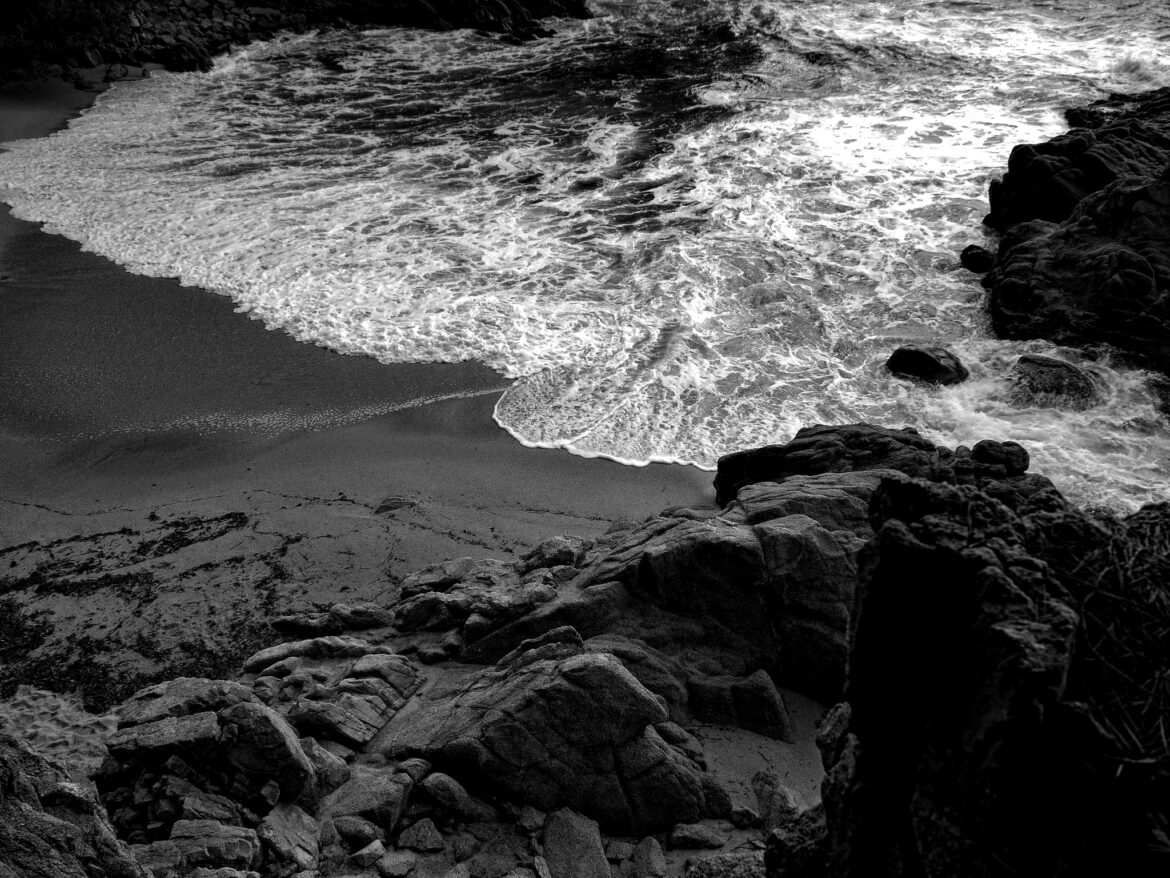
These geographies tend to enter public awareness when a tragedy of sufficiently spectacular proportions occurs. For a few days the headlines, the images, the figures, and the institutional statements appear. Afterward, the water recovers its appearance as landscape, border, or tourist destination, even though the deaths continue almost every day and most of the disappeared are never identified.
Geothanatology is born of my inability to accept that normalization. It studies not only where migrants die, but how the territory takes part in the production, concealment, and meaning of those deaths. The sea, the river, the desert, or the jungle are not innocent settings. They can be turned into border technologies that scatter bodies, erase evidence, and allow political responsibility to be confused with a supposed natural fatality.
My method develops through three inseparable movements. Forensic cartography gathers coordinates, trajectories, currents, images, institutional archives, and data on disappearances. Political and visual analysis examines the protocols, omissions, and narratives that turn human decisions into inevitable accidents. Poetic restitution asks what art can do with that truth when the report, the statistic, or the case file have exhausted their capacity to produce attention.
The work does not then appear to illustrate a prior investigation, but to continue it through other languages. A coordinate can become a place of mourning, a map can function as an epitaph, and a figure can recover something of the human presence it lost on entering a database. Artistic form does not replace evidence, but it can prevent that evidence from ending up as a dead archive.
This approach also obliges me to acknowledge my own position. My migratory experience does not grant me the right to speak on behalf of other people, but it prevents me from feigning a neutrality I do not have. Geothanatology is autoethnographic because it assumes that the one who investigates is also implicated in what they observe. That implication does not guarantee a correct gaze, but it forces one to ask constantly from where one looks, what is shown, what is omitted, and what benefit can be extracted from the pain of others.
Investigating these deaths also demands resisting artistic extractivism. The suffering of others cannot become a quarry of images, symbols, and narratives meant to feed a career. That is why the method must include consent, the participation of communities when direct testimonies exist, the right to withdraw information, and the material or symbolic return of the knowledge produced.
I also try to be honest about the limits. A work does not rescue a boat, does not identify a body, does not bring back a disappeared person, and does not guarantee justice for their family. To make a problem visible is not the same as solving it, and to confuse the two would only feed the artist’s grandiloquence. Yet sustaining one’s gaze when public attention has withdrawn is not a useless gesture either. Art can interrupt habit, return a question to the present, and make visible what the landscape and administrative language have learned to conceal.
It may seem that my investigations return again and again to the sea and to disappearance. I do not regard that recurrence as a lack of subjects, but as a form of insistence. The matter returns because the violence continues and because each project reveals a different layer of its architecture. I prefer to take the risk of repeating myself rather than to chase novelty while turning my back on a reality that has not stopped repeating itself.
From my modest position, each investigation tries to draw the attention of those who still contemplate these geographies as empty surfaces. If my work can serve any function, it consists in getting someone to pause before the blue long enough to understand that behind the landscape there are many deaths, and that most still have no name.