
Golden Standard
Status: research project in progress. The four lines remain open: material tests, source gathering and production of pieces.

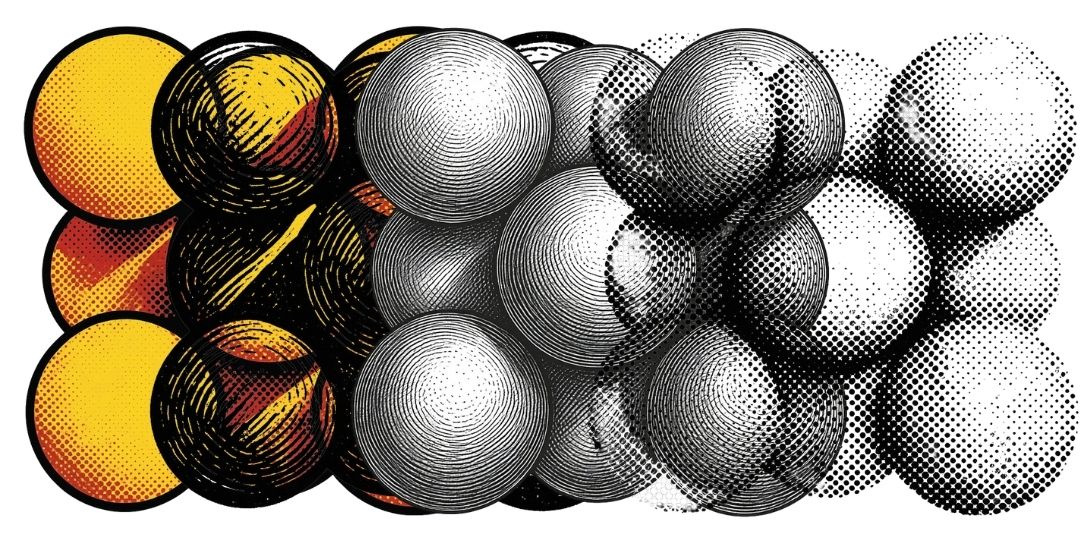
Golden Standard is an ongoing research project that examines gold not as a metal but as a code. A code at once chromatic, material, statistical, and colonial, sustained for centuries by systems of cataloguing and accounting that fail whenever they try to contain it.
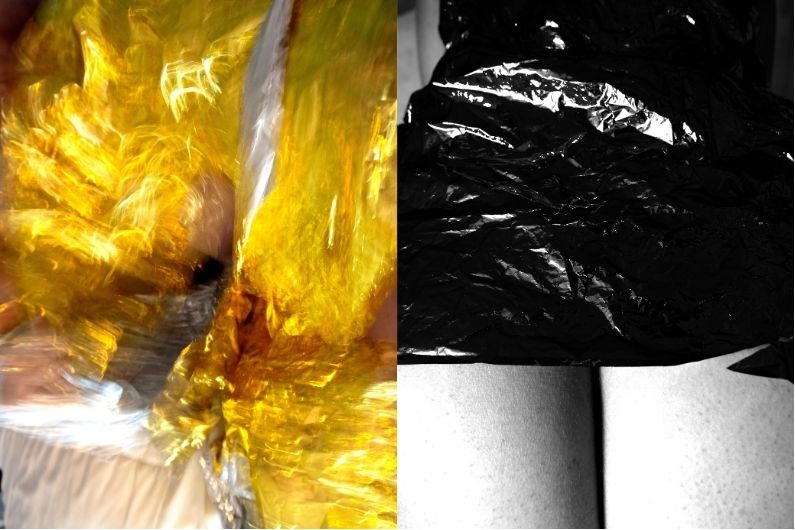
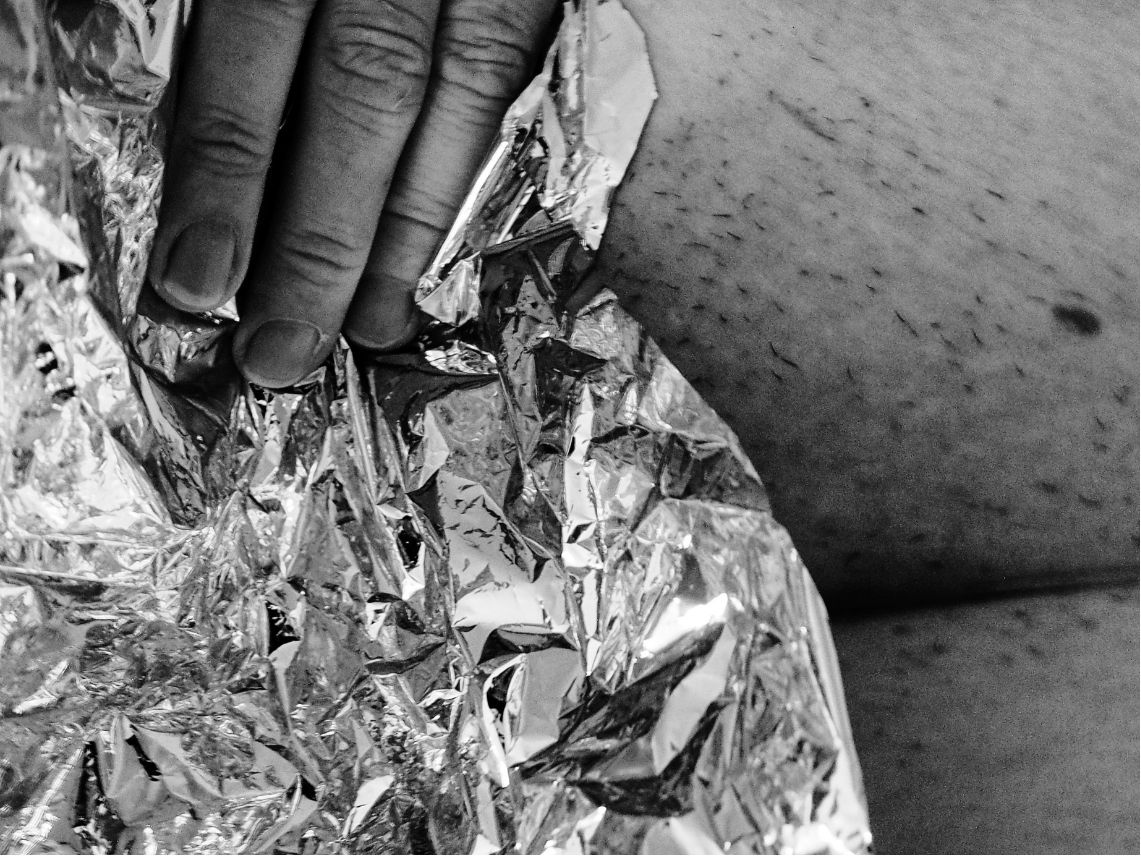
The image that organizes the project is the golden thermal rescue blanket, a two-gram industrial plastic that over the past ten years has become the dominant iconography of the European migration crisis. The blanket is not made of gold and does not warm through its color. It is metallized aluminum on polyester with a superimposed amber tint, and its golden side became widespread for its visibility in rescue location, not for its thermal performance. The gold that wraps the rescued is not care but optical signal.
That gap between what the image says and what the material does is the point of entry. From there, the project unfolds along four lines of research that produce work rather than illustrate it.
Four lines of research
1. The color that cannot be diluted
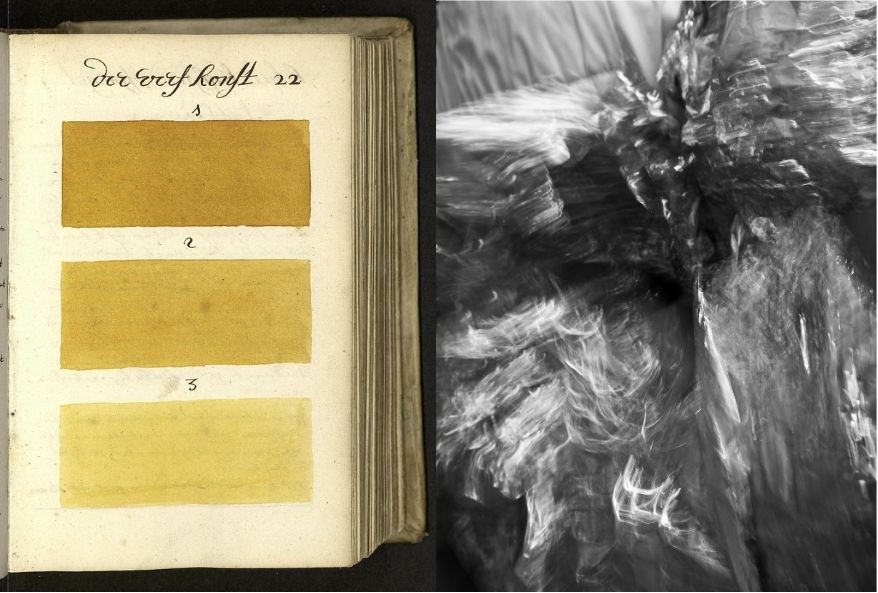
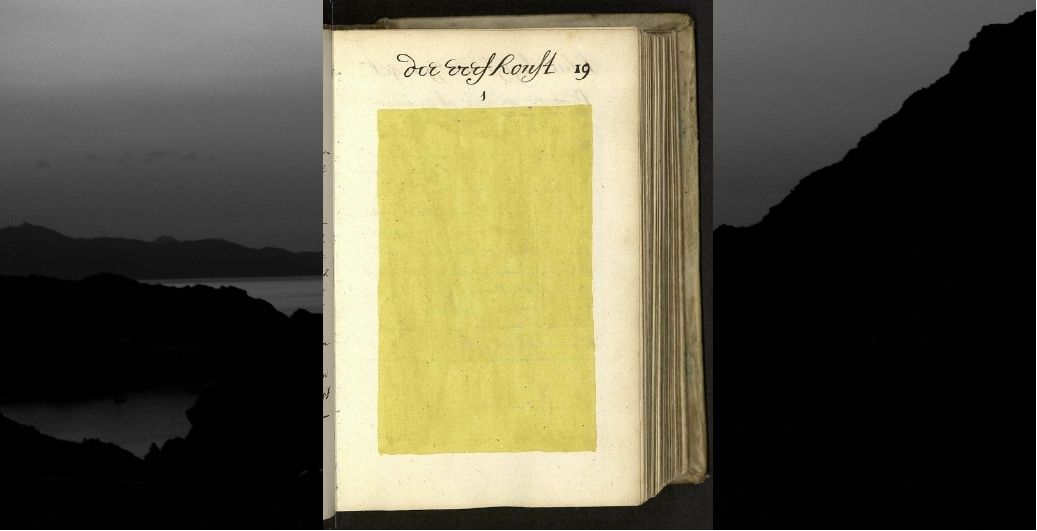
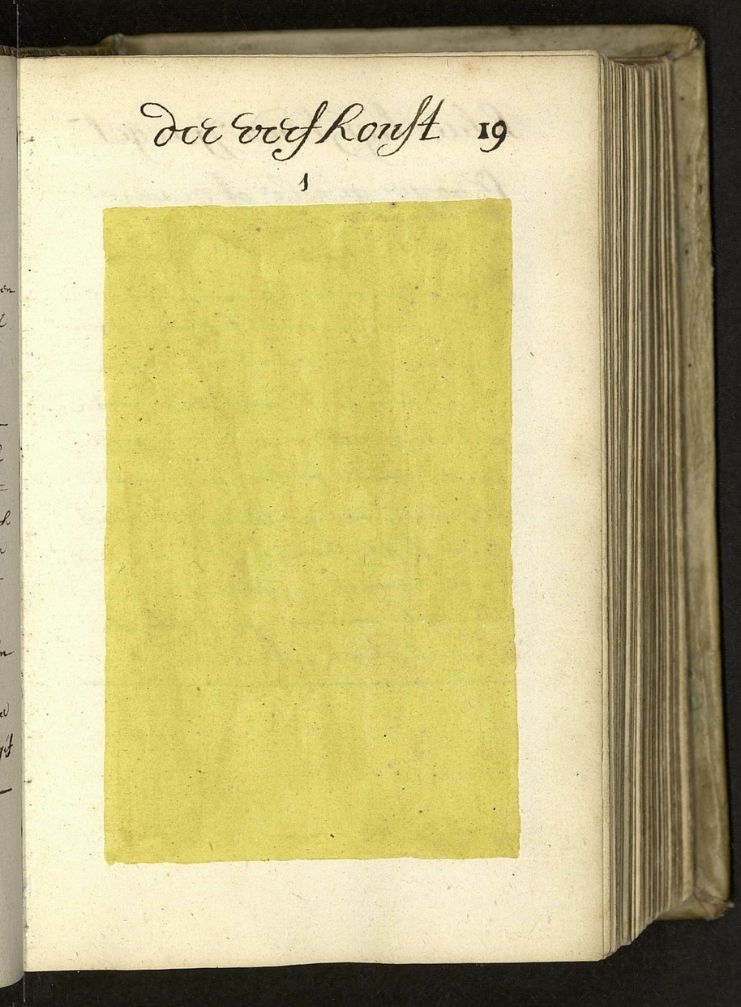
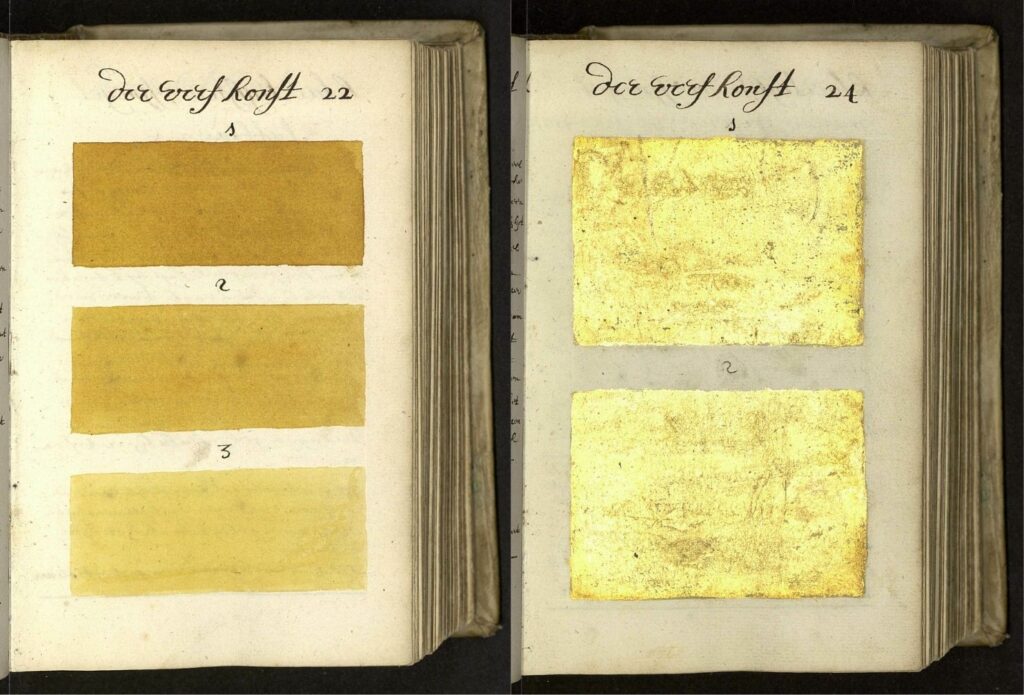
Gold as the exception to the Western system of chromatic cataloguing. Central reference: the manuscript of A. Boogert (Delft, 1692), Klaer Lightende Spiegel der Verfkonst, held at the Bibliothèque Méjanes in Aix-en-Provence under shelf mark Ms. 1389 (1228). In a treatise with approximately 2,070 hand-painted color samples, gold is the only pigment that cannot be diluted in water and appears solely as polished and unpolished. Three and a half centuries later, contemporary industry still cannot reproduce gold exactly in metallic Pantone, RGB, or CMYK. Gold is the structural exception of the system.


2. The material that is not gold
The golden thermal blanket as an industrial emergency material. A combined composition of biaxially oriented polyester (BoPET, commercially Mylar) vacuum-metallized with a nanometric layer of aluminum, with an amber coating on the golden side. Its technical history links the material to 1960s aerospace development at NASA. Its most recent iconic drift is situated, from 2015 onward, in the context of rescue on the Mediterranean border.
3. The triple accounting
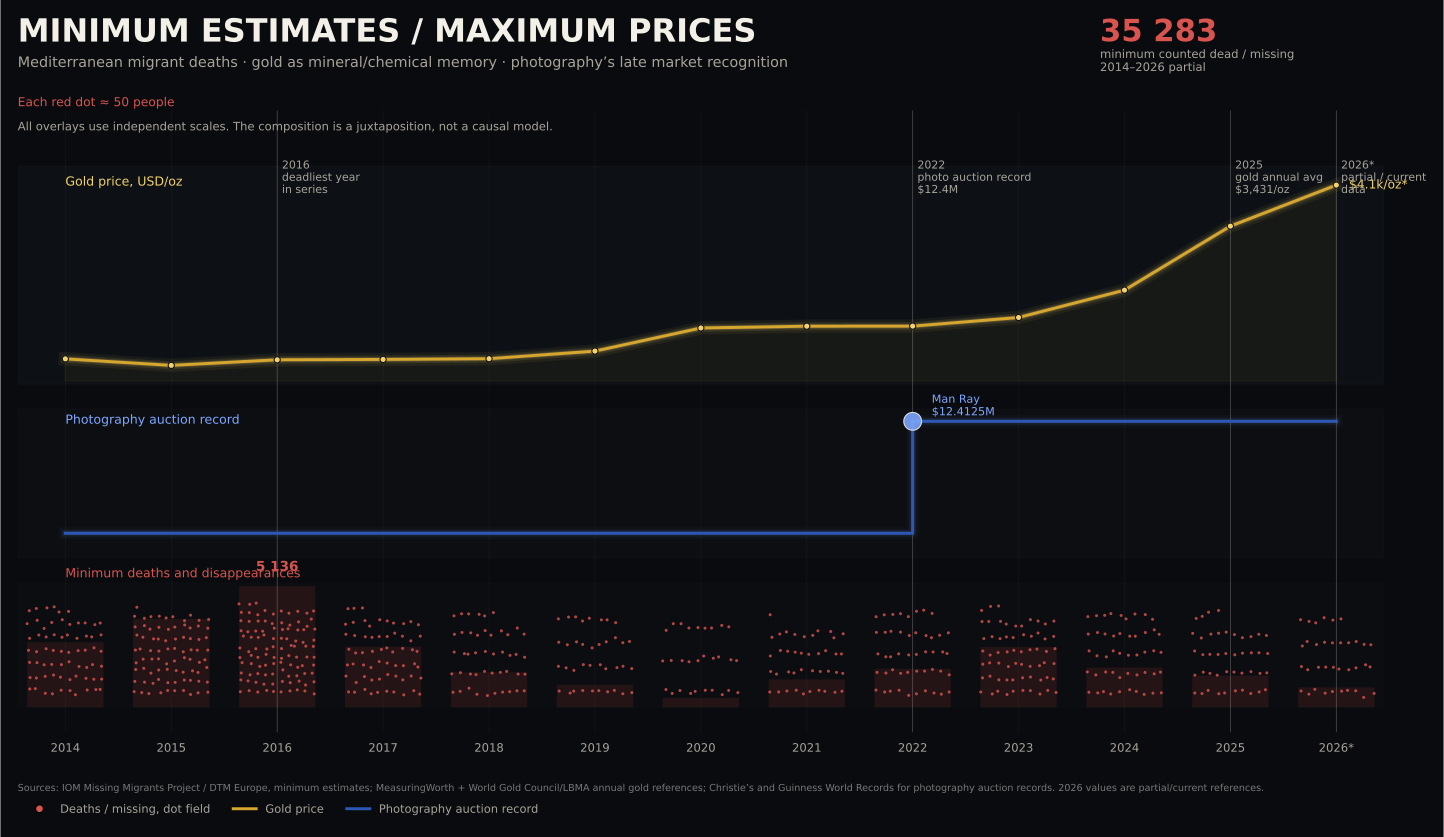
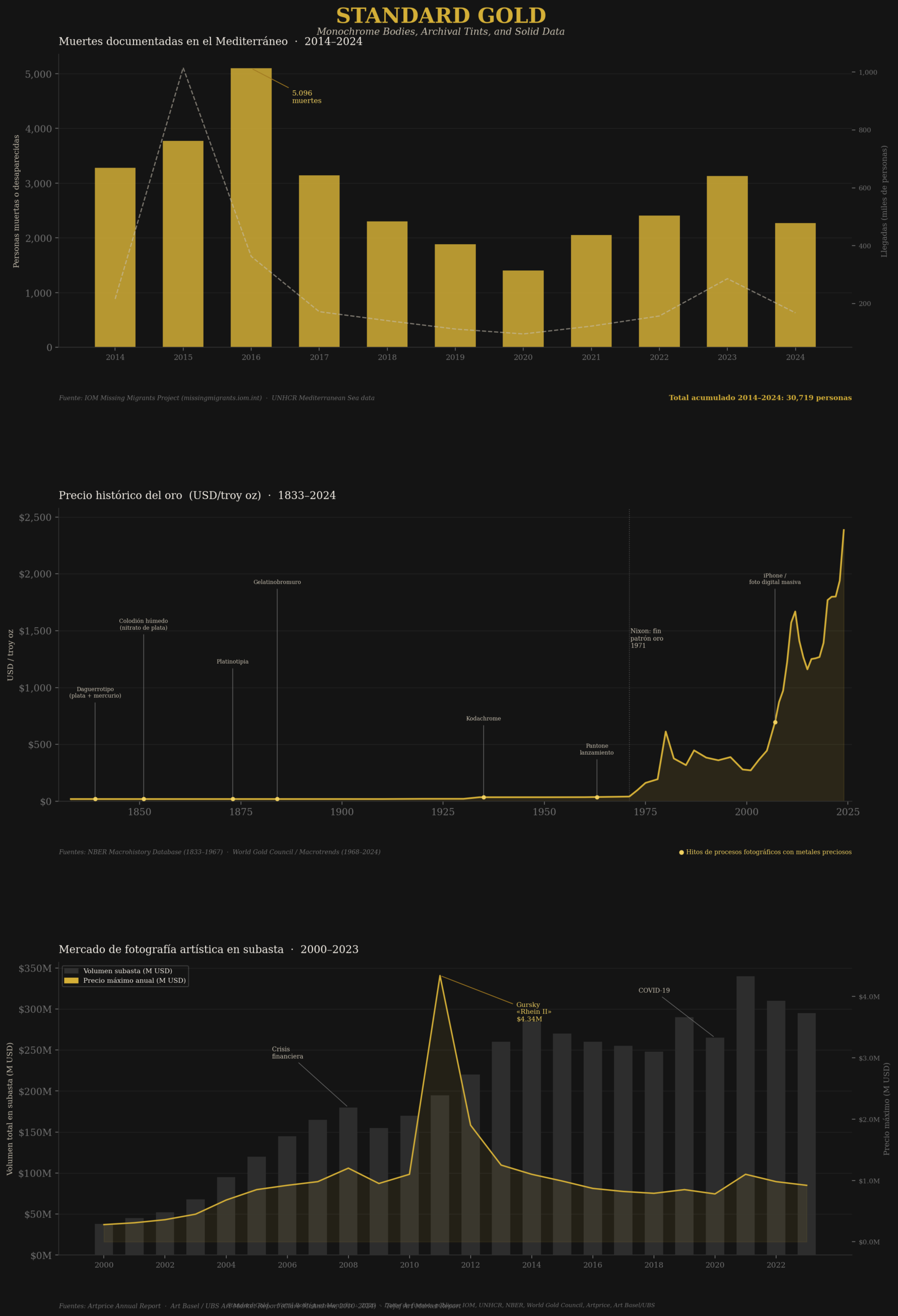
Three mutually incompatible statistical records that the work inscribes together precisely because their asymmetry is the argument. The long-run price of gold since 1833, according to the National Mining Association and the London Bullion Market Association. Deaths at sea recorded by the Missing Migrants Project of the International Organization for Migration and by Caminando Fronteras, two sources that can differ by as much as an order of magnitude for the same route and the same year. And the market value of rescue photojournalism, with international award grants and photography auctions. The project neither averages nor chooses between the sources. It inscribes the discrepancy as part of the argument.
4. The colonial archive and photographic gold
The extractive genealogy of gold and its entry into the photographic medium itself. From the gold of Varna to the Cerro Rico of Potosí, from the Andean mita to the mercury of Huancavelica, from the nineteenth-century gold rushes of California (1848) and Australia (1851) to the gold chloride used in nineteenth-century photographic toning. Photography is not merely complicit in colonial extractivism. It is made of it.
Four series of work
Monochrome Bodies
Principal photographic series. Photographs of a body without identity wrapped in a thermal blanket, on methacrylate, in square 1:1 and vertical 9:16 formats. In black and white with gold as the only surviving chromatic channel, and a second version in digital negative in which gold, by its high luminance, becomes a zone of deep shadow.
Archival Tints
Fragments of A. Boogert’s manuscript reproduced in large format on aluminum dibond, with a specification sheet integrated in neutral sans-serif type in the lower margin. Each piece states shelf mark, folio, year, original technique, colonial provenance of the pigment where applicable, and the chromatic coordinates of the fragment.
Solid Data
Large-format object-pieces on dibond or methacrylate with painterly intervention in golden metallic ink and, in a limited number of pieces, with real gold leaf. Each piece inscribes by hand cross-referenced figures from the three statistical records. A discreet QR code in the lower margin links to the live sources of each record.
Formula
Two autonomous pentaptychs that decompose the nineteenth-century recipe for gold photographic toning (Nelson-type formula: gold trichloride, thiourea, tartaric acid, sodium chloride, distilled water). Formula (matter) operates as a material intervention on Hahnemühle paper in frieze format, with widths proportional to the real weight of each reagent. Formula (record) operates as macro photography of the actual reagents, where only the gold trichloride container appears with a legible commercial label, underscoring that this reagent is the only one with a price, a market, and traceability.
Ethical framework
The project operates under a framework of eight declared ethical principles. The full text of the framework is in the Ethical Framework section of the site, common to the whole practice. Summary as applied to Golden Standard. It has been in development since August 2026.
Golden Standard does not photograph real migrant bodies. The image of the rescued person wrapped in a blanket is protected in the project through its absence. This principle is not reversible.