
Promises to the North
Surveillance, salt, and thermal blanket over the domestic Mediterranean
It all began from a balcony. For months, the camera pointed downward, capturing figures who crossed the frame without knowing it. Immigrants, tourists, villagers. The gesture reproduced, at a domestic scale, the logic of the satellite. From that zenithal position an uncomfortable question emerged. What distinguishes the curious eye from the eye that surveils.
Promises to the North starts from that ambivalence to interrogate a contradiction that structures contemporary life. Surveillance systems—satellites, drones, thermal sensors—operate with apparent neutrality. They record bodies, not identities. They detect heat signatures, not stories. The orbital grid does not distinguish between the tourist strolling by and the migrant fleeing. But the consequences of being seen differ radically depending on whose body is captured.
The thermal blanket functions simultaneously as a survival technology and as an attempt at evasion. To retain one’s own heat, to disappear from the infrared spectrum. That both functions coincide in the same object reveals something about the condition of the contemporary migrant. To survive and to hide are indistinguishable gestures.
The project is traversed by a specific memory. The Mariel crisis of 1980, when more than one hundred and twenty-five thousand Cubans left the island in an improvised flotilla. The balseros crisis of 1994, with its images of bodies clinging to inner tubes and planks. To emigrate afterward, to become that body which one day crossed a border, transforms the way one sees. To photograph from the balcony is not merely an exercise in reflexive voyeurism. It is also an attempt to understand what it means to be safe, what it implies to have arrived, what is owed to those who still cross.
The installation apparatus
The installation is organized into three vertical strata that reproduce the descending hierarchy of the surveilling gaze, from orbit to the body.
Upper stratum. The satellite
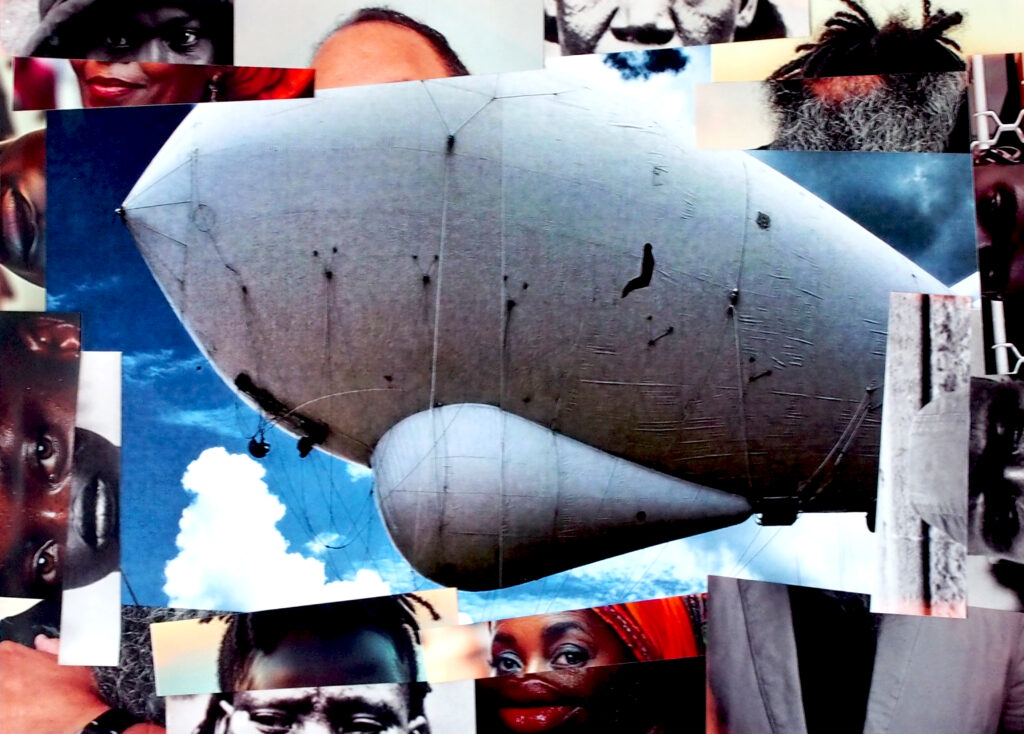
A piece composed with an image of Frontex’s suborbital satellite, over a background of fragmented faces. A self-portrait of the artist, nineteenth-century African colonial archive photographs, the artist’s own street photography, and images generated with declared digital composition tools. All the faces cut and reassembled to produce hybrid figures in which no subject is reconstructable.
Middle stratum. The drones
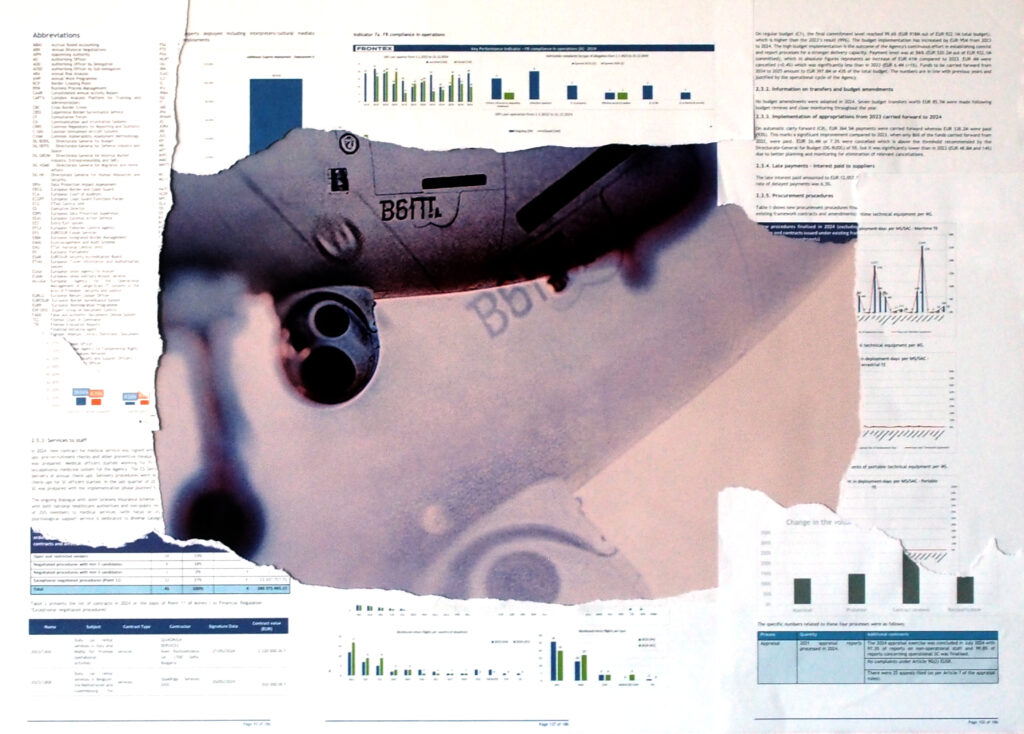
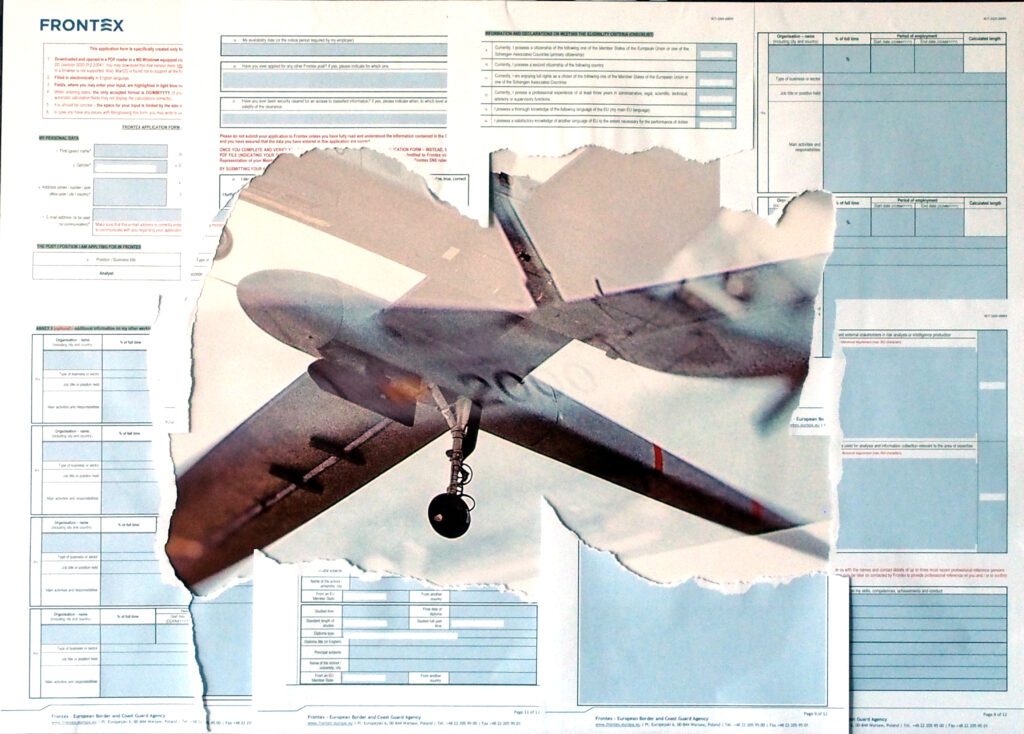
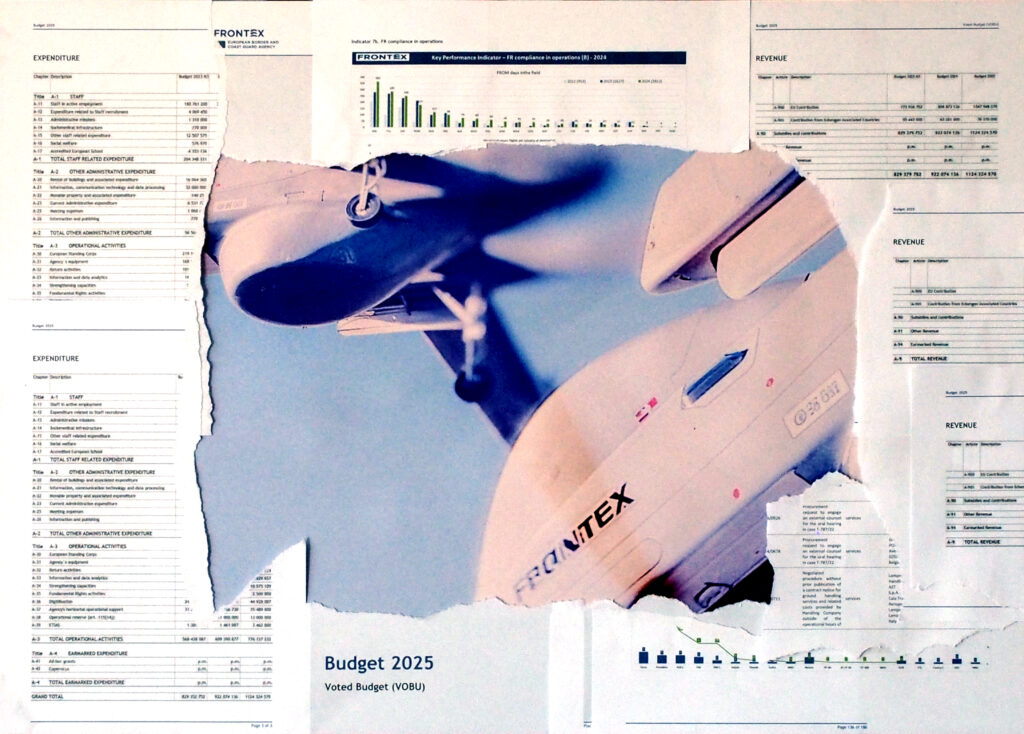
Three pieces with images of Frontex drones drawn from the agency’s public documentation. Each drone appears surrounded by hand-torn fragments of official budgets, performance reports, and recruitment forms. The triangular formation in which the drones are arranged is the figure of calculation and tactical stability. The system is regular. What it surveils is not.
Central stratum. The eight pieces of the body
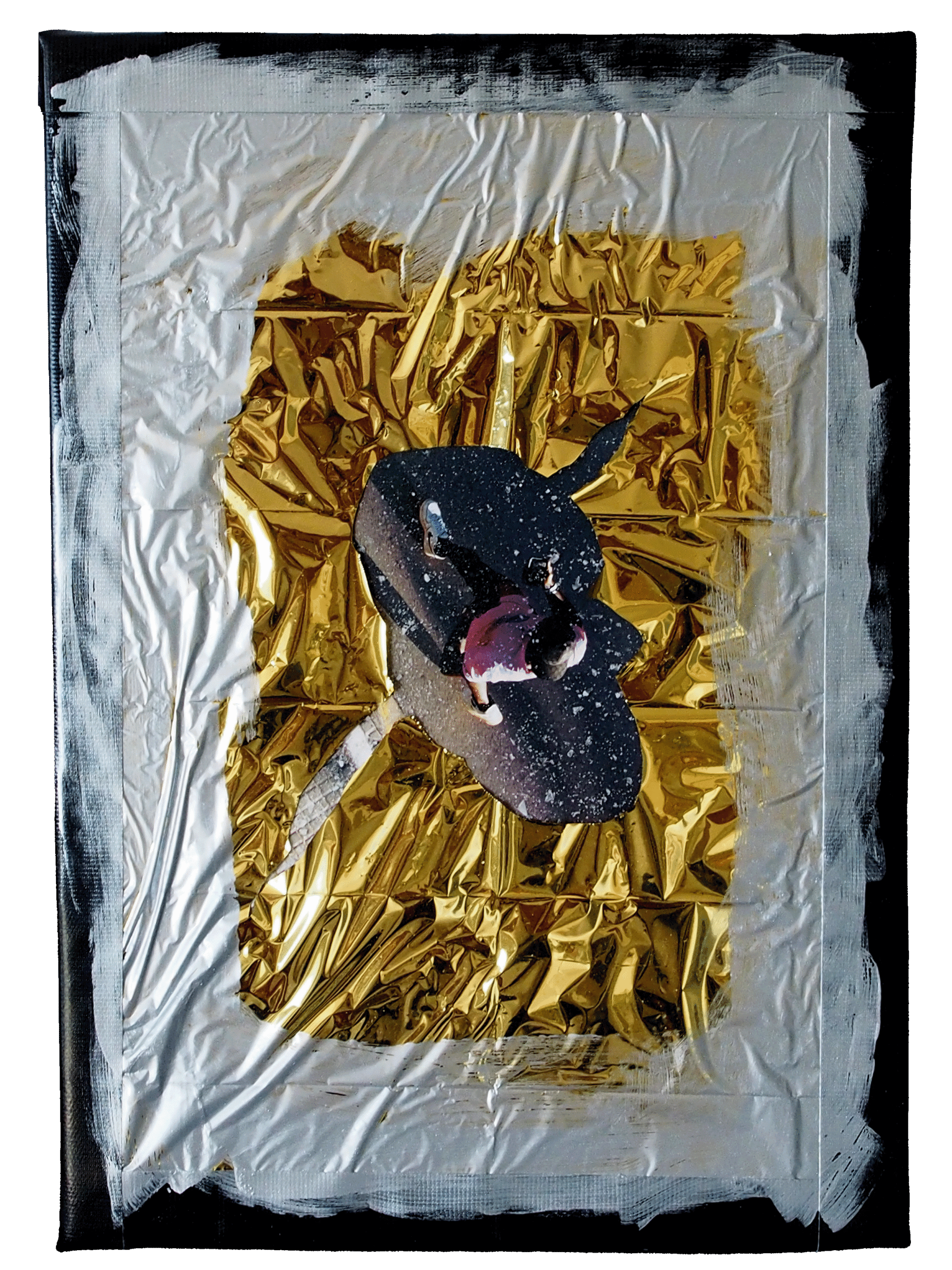
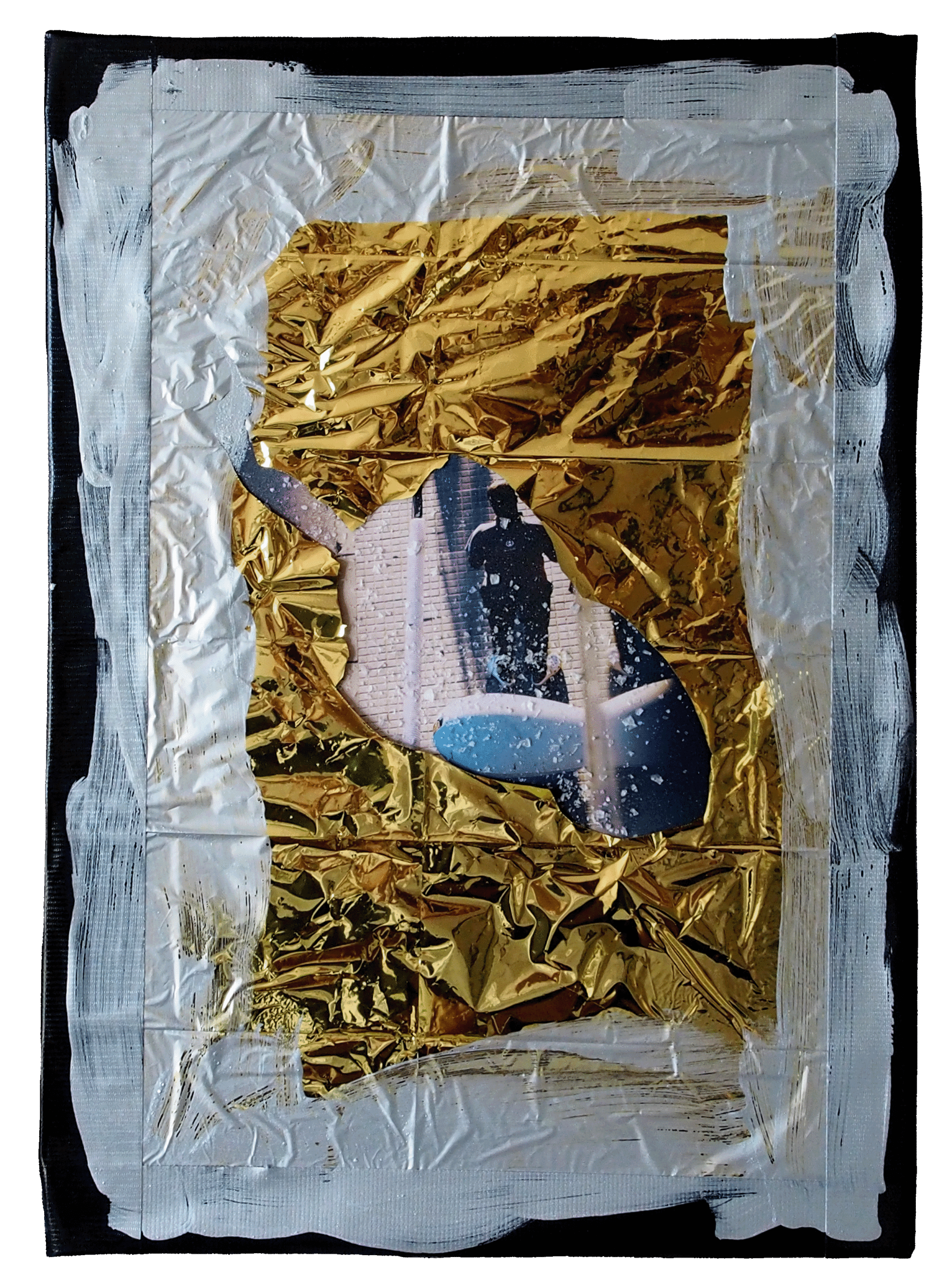
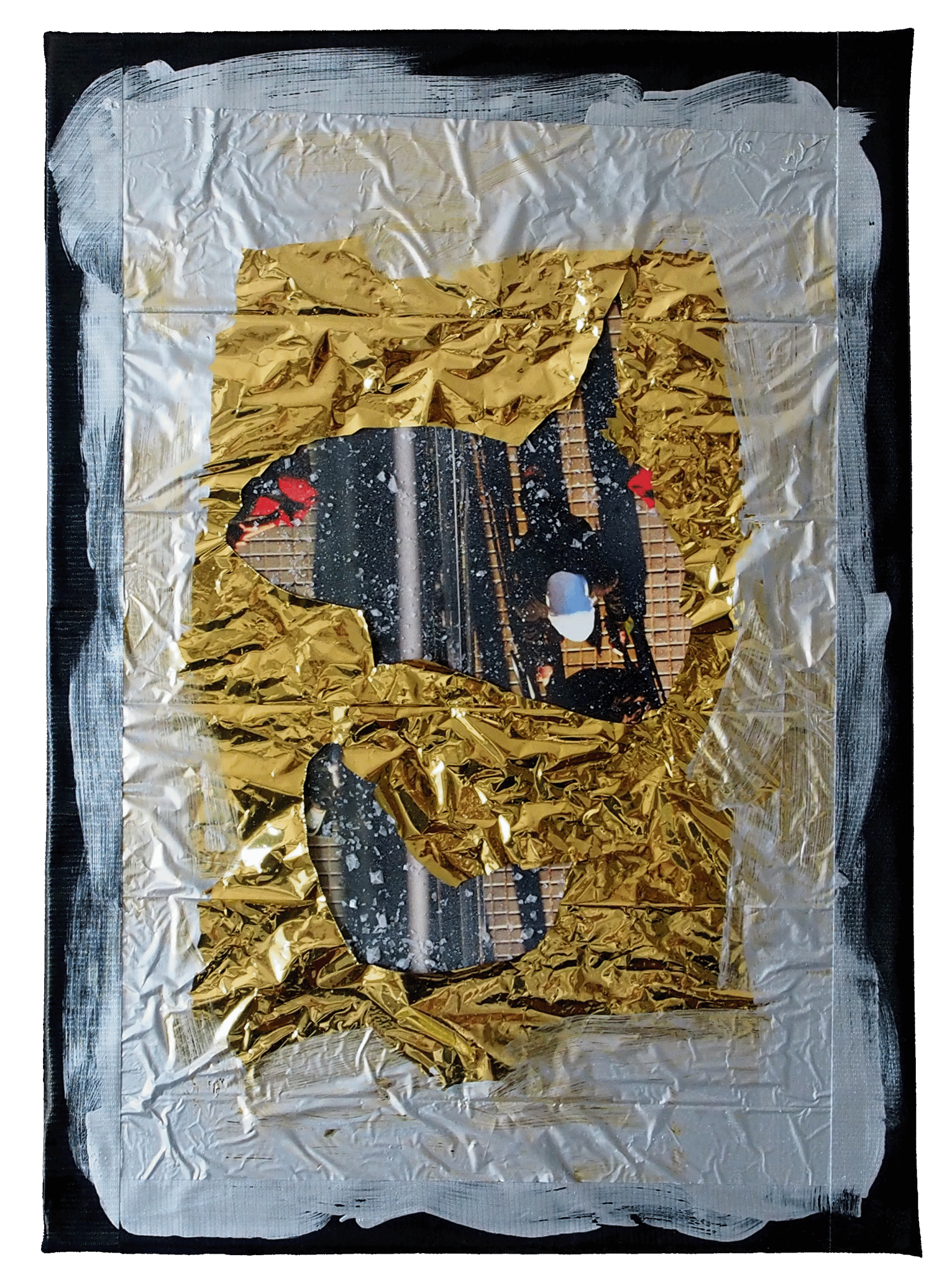
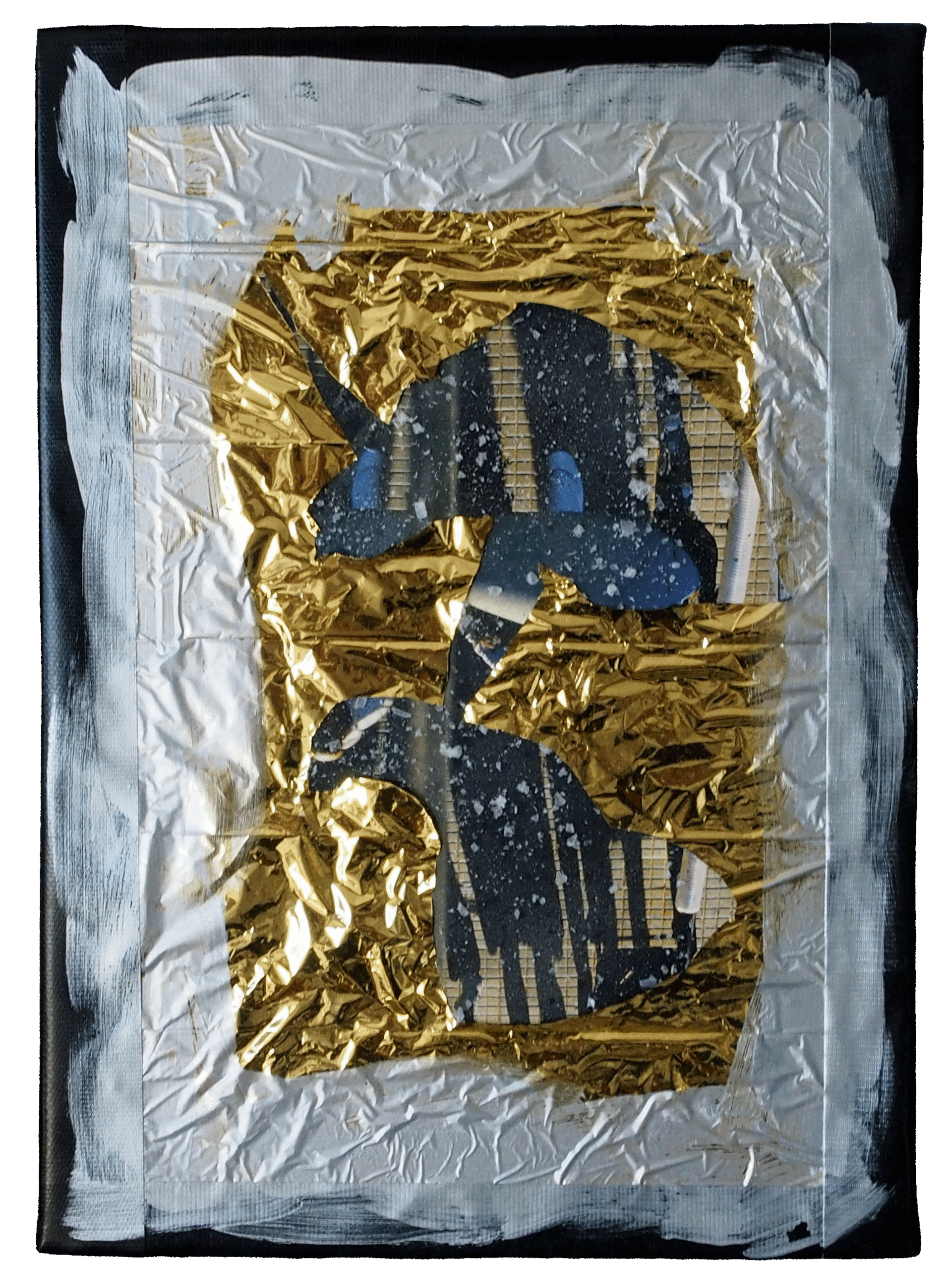
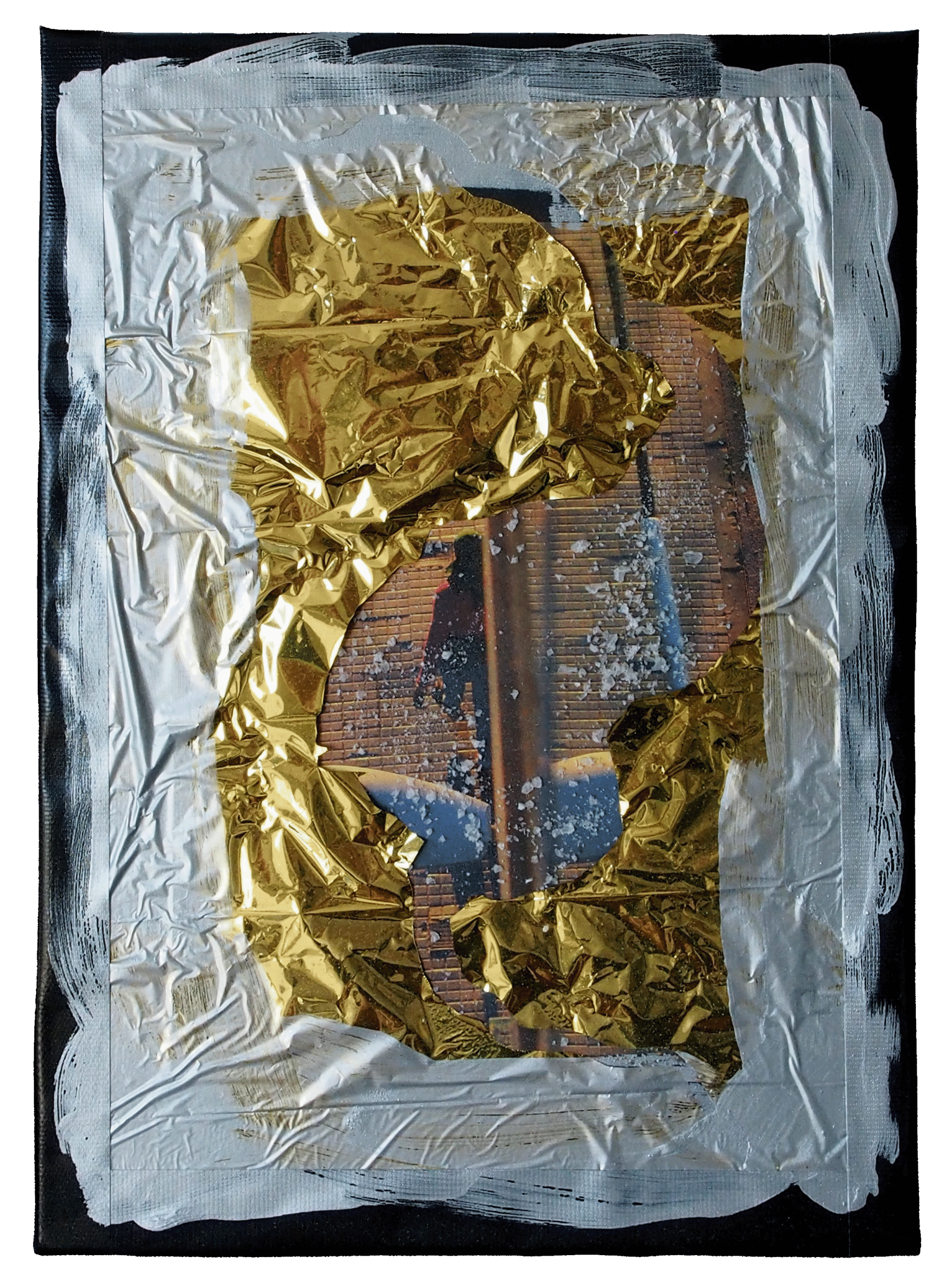
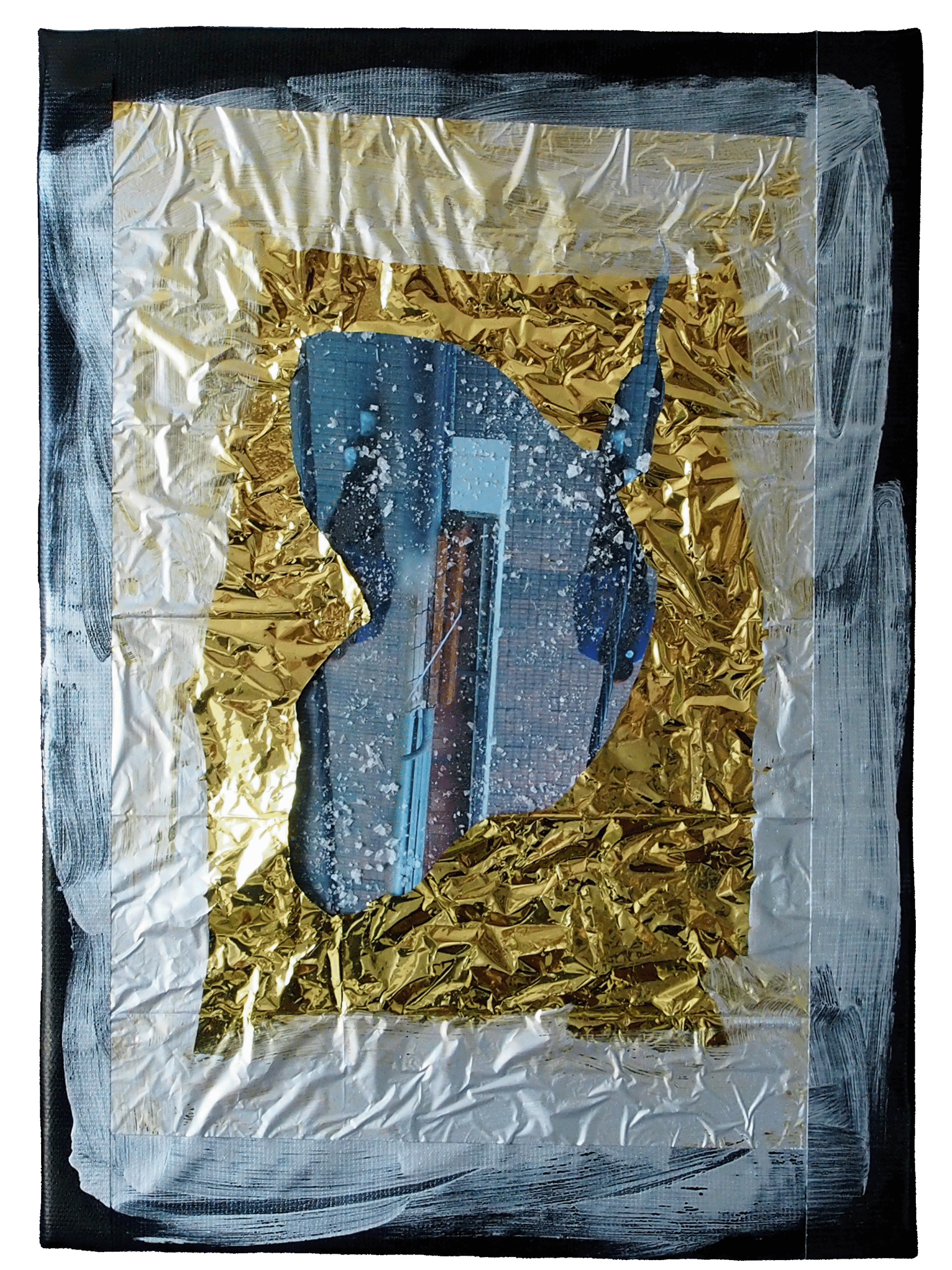
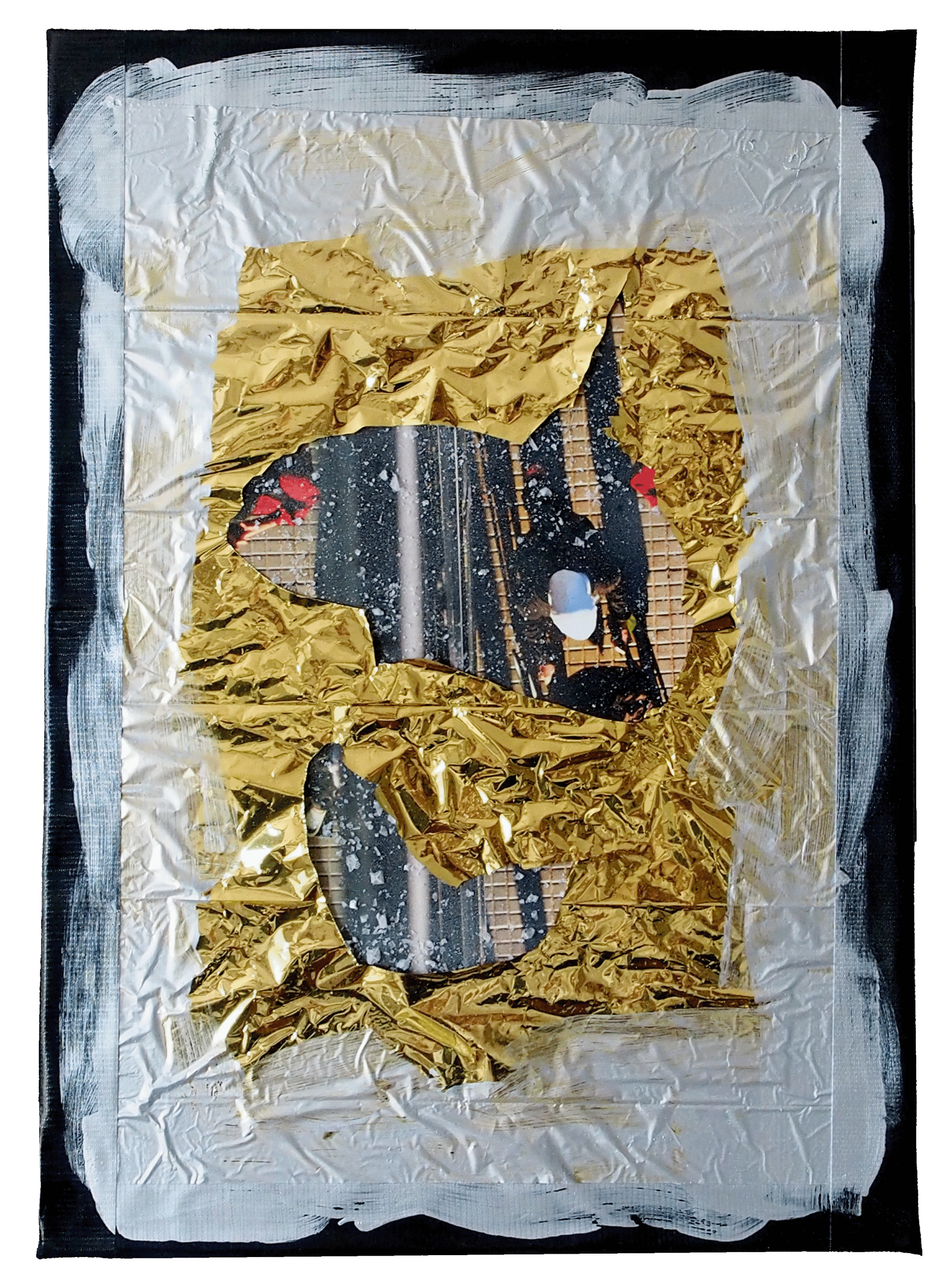
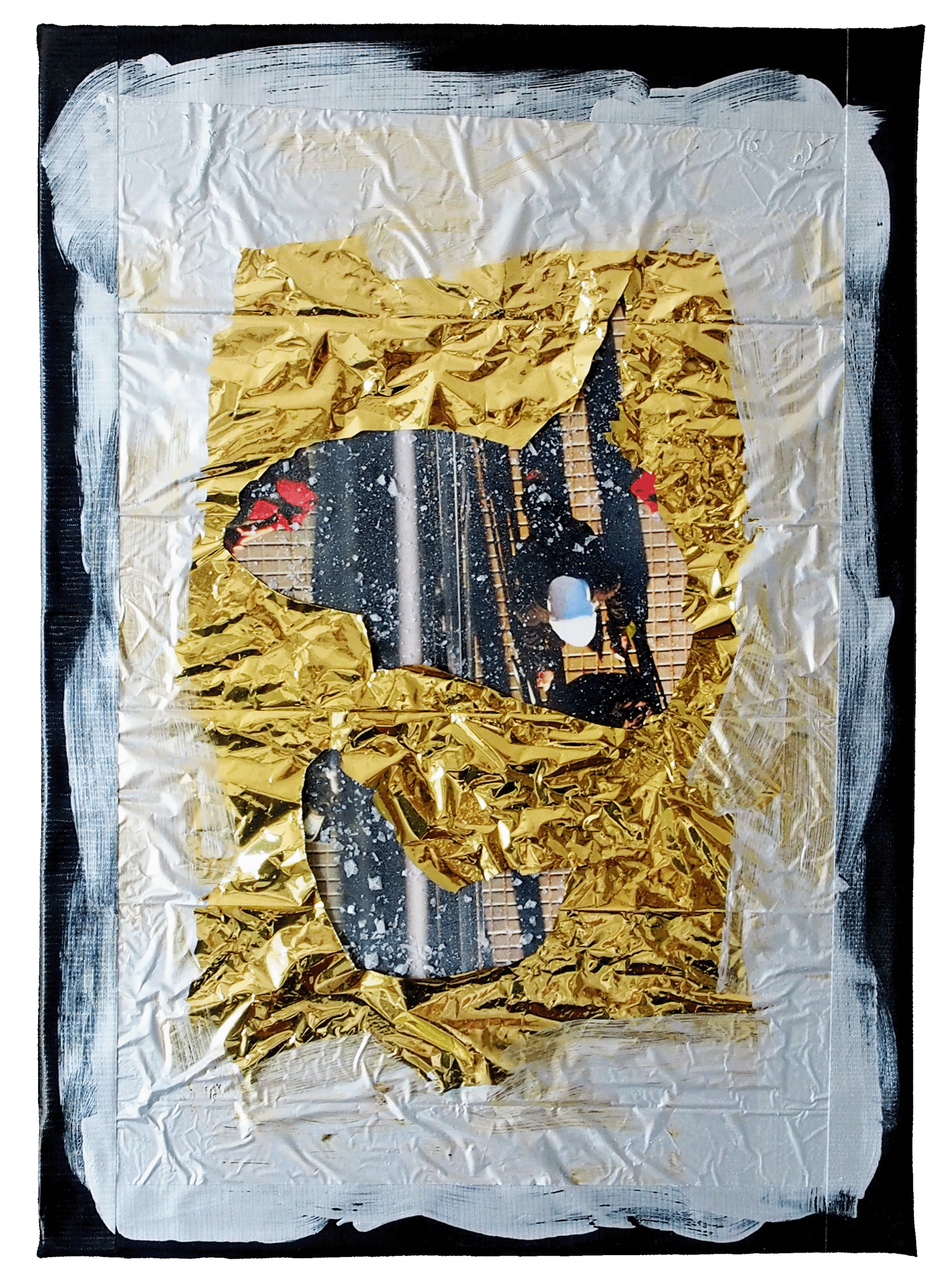
Eight pieces arranged horizontally, each built by the same procedure. A zenithal photograph taken from the artist’s balcony, mounted on a rigid surface. Industrial salt of Mediterranean origin crystallized on the surface and fixed with adhesive. Fully covered with a golden thermal blanket, sealed at the edges with duct tape. Painterly intervention in silver acrylic, and a manual tear at the center that partially reveals the underlying photograph. Eight variations on the same apparatus.
Lower stratum. The thermal blot
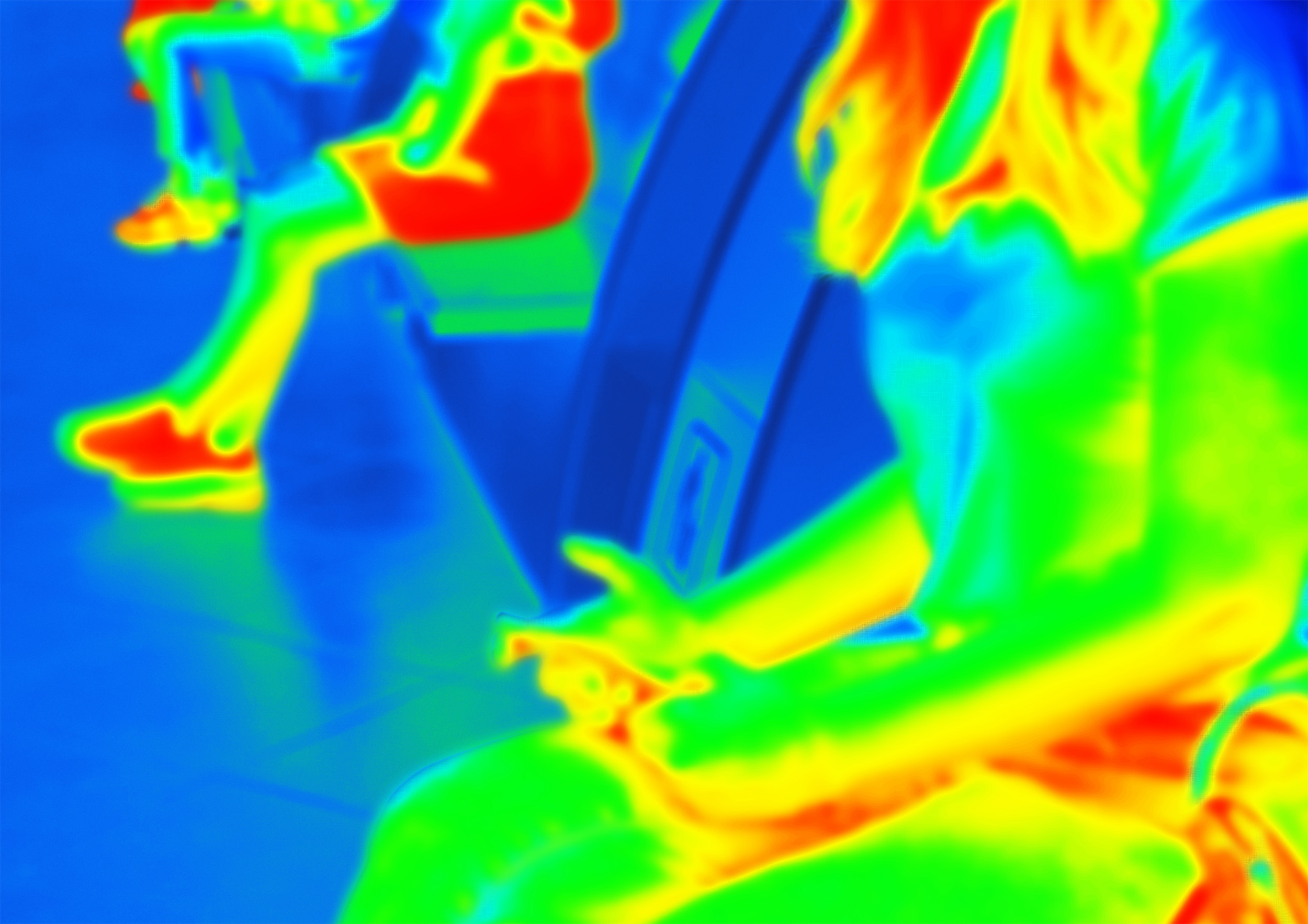
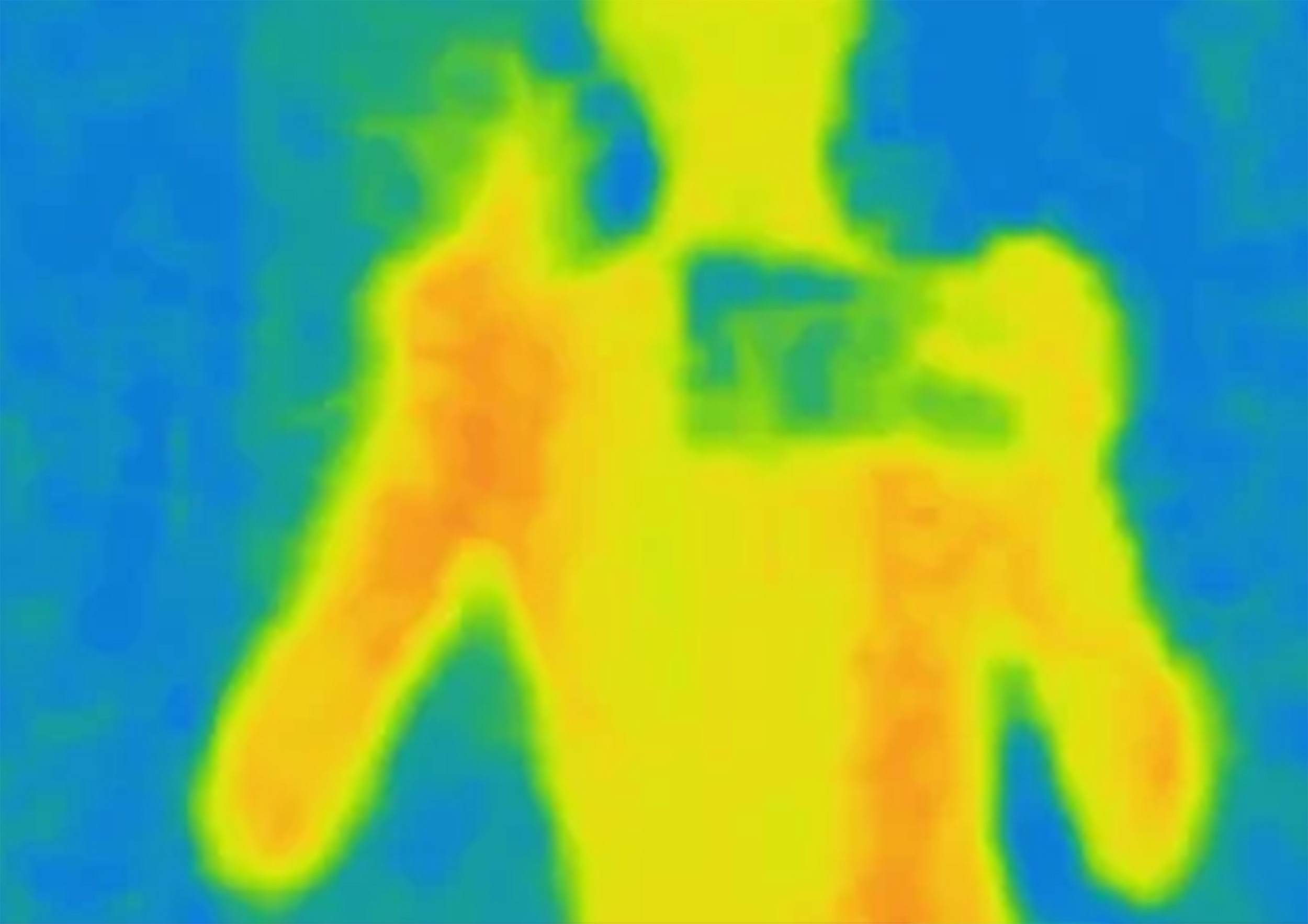
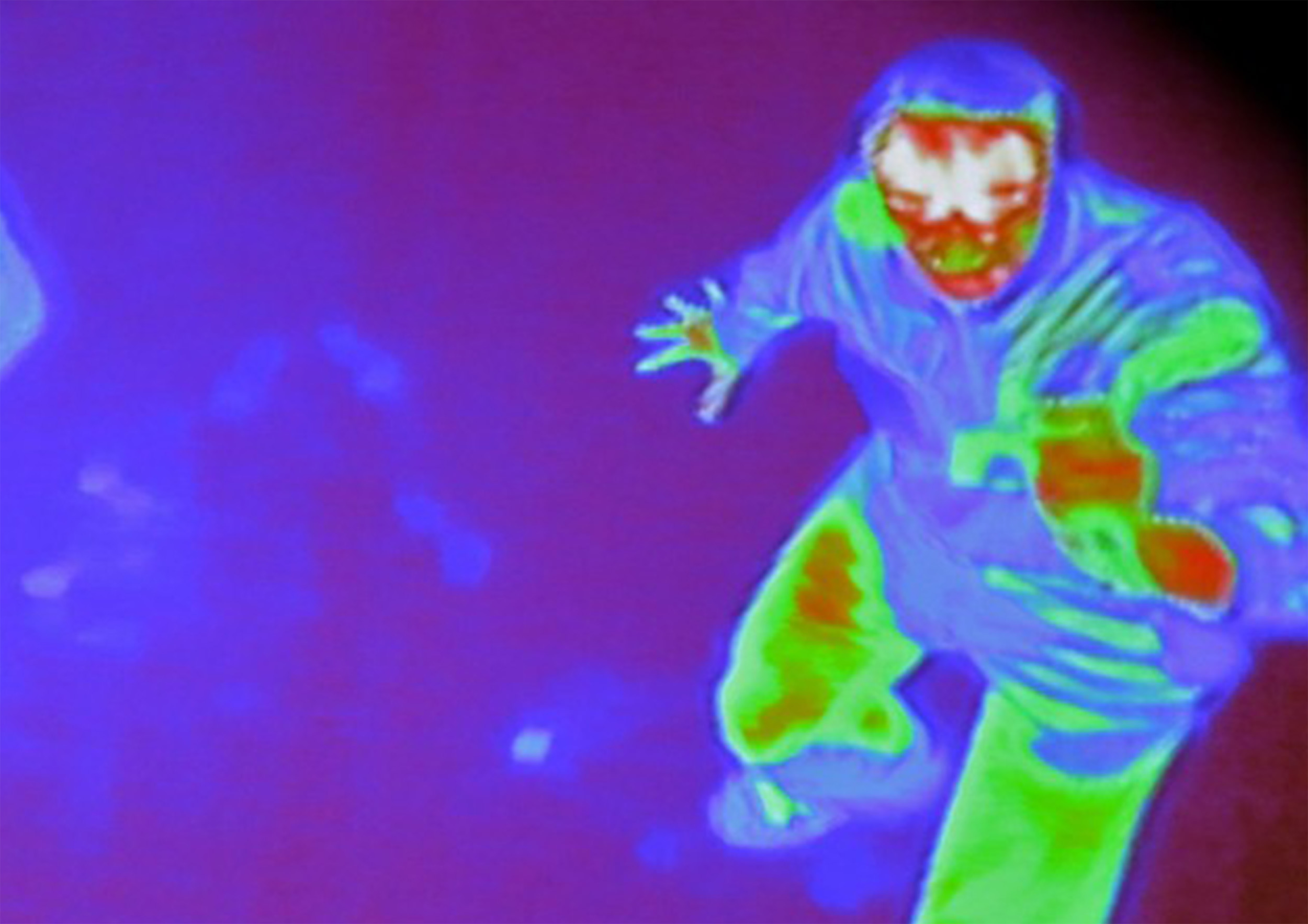
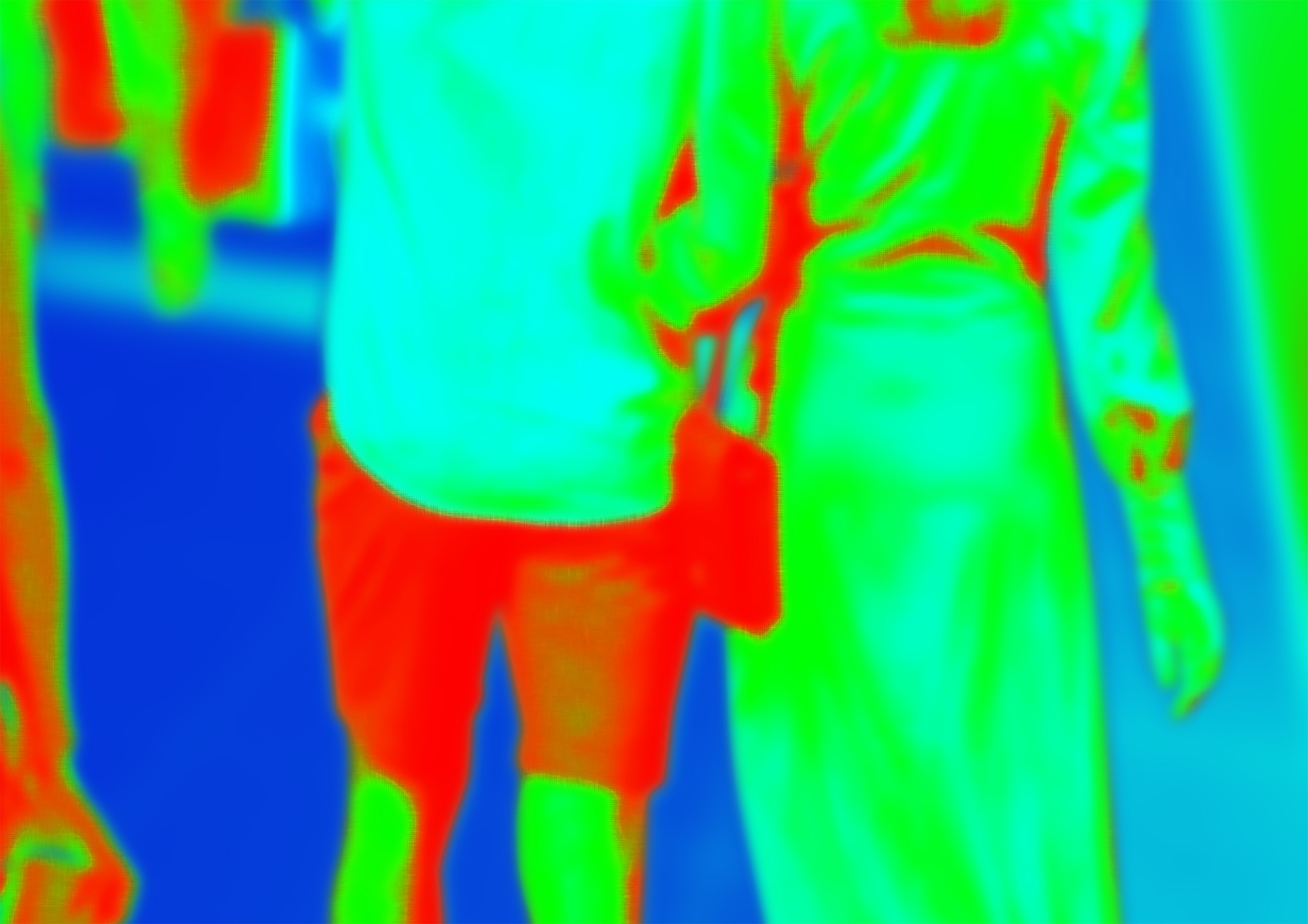
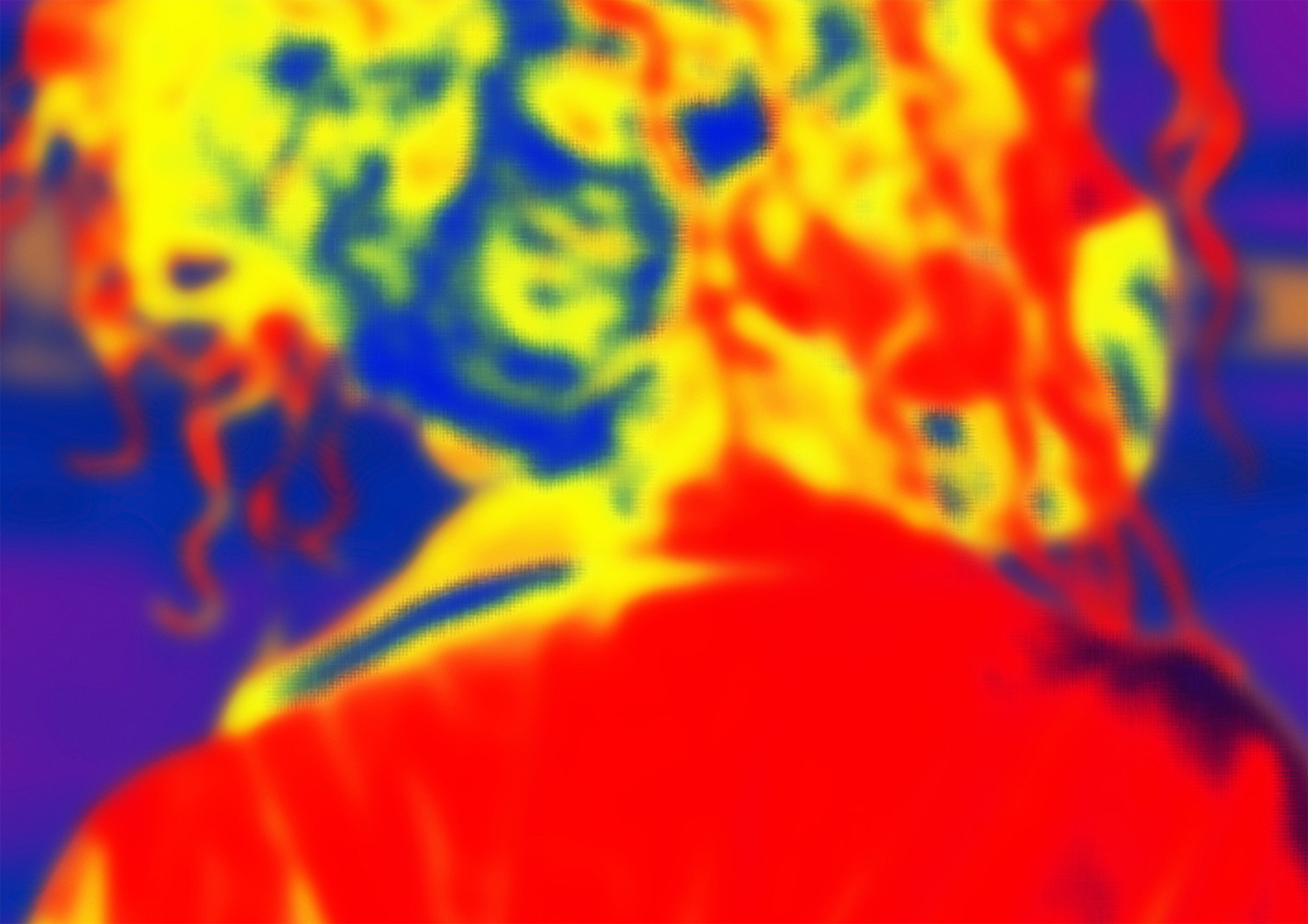
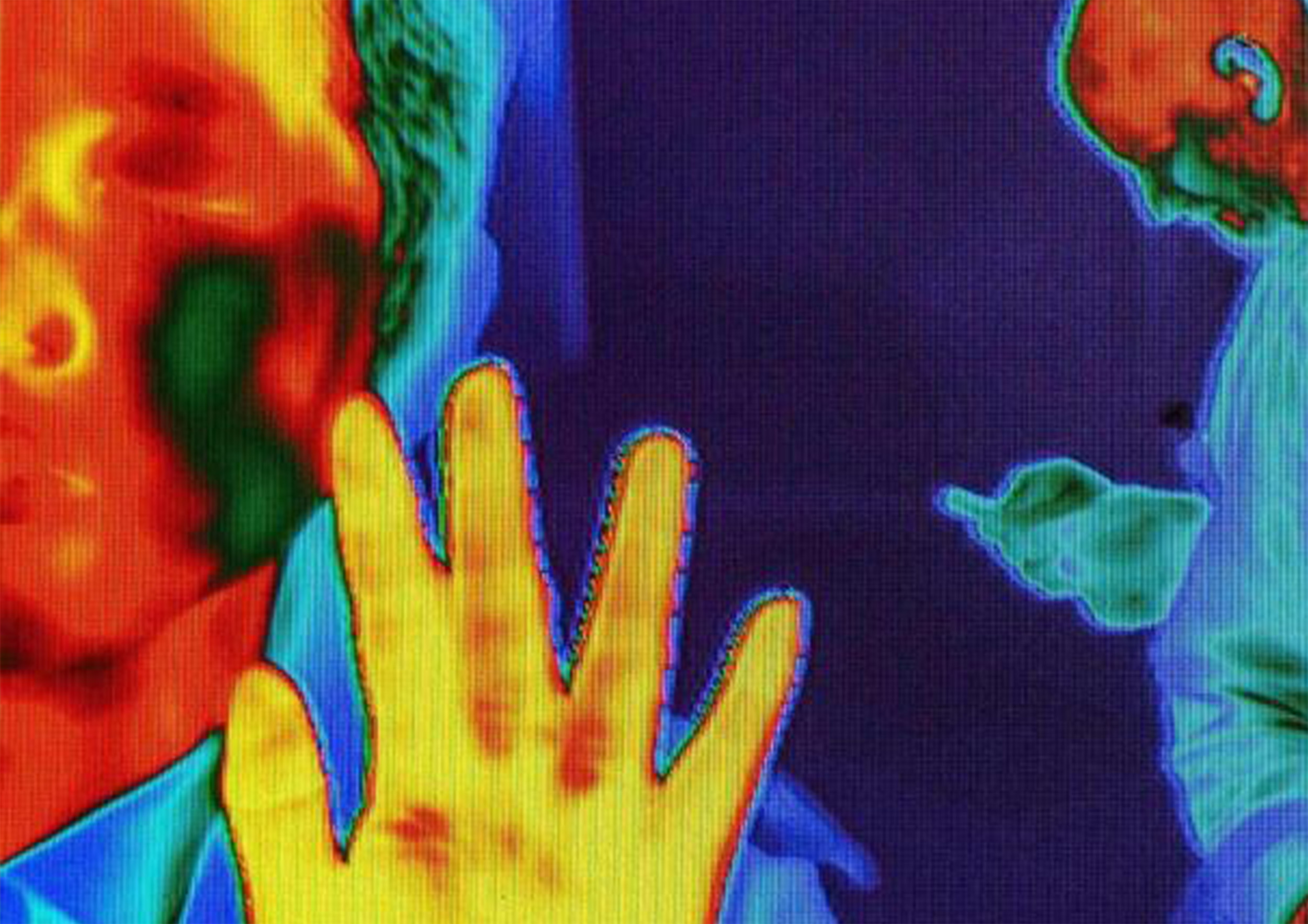
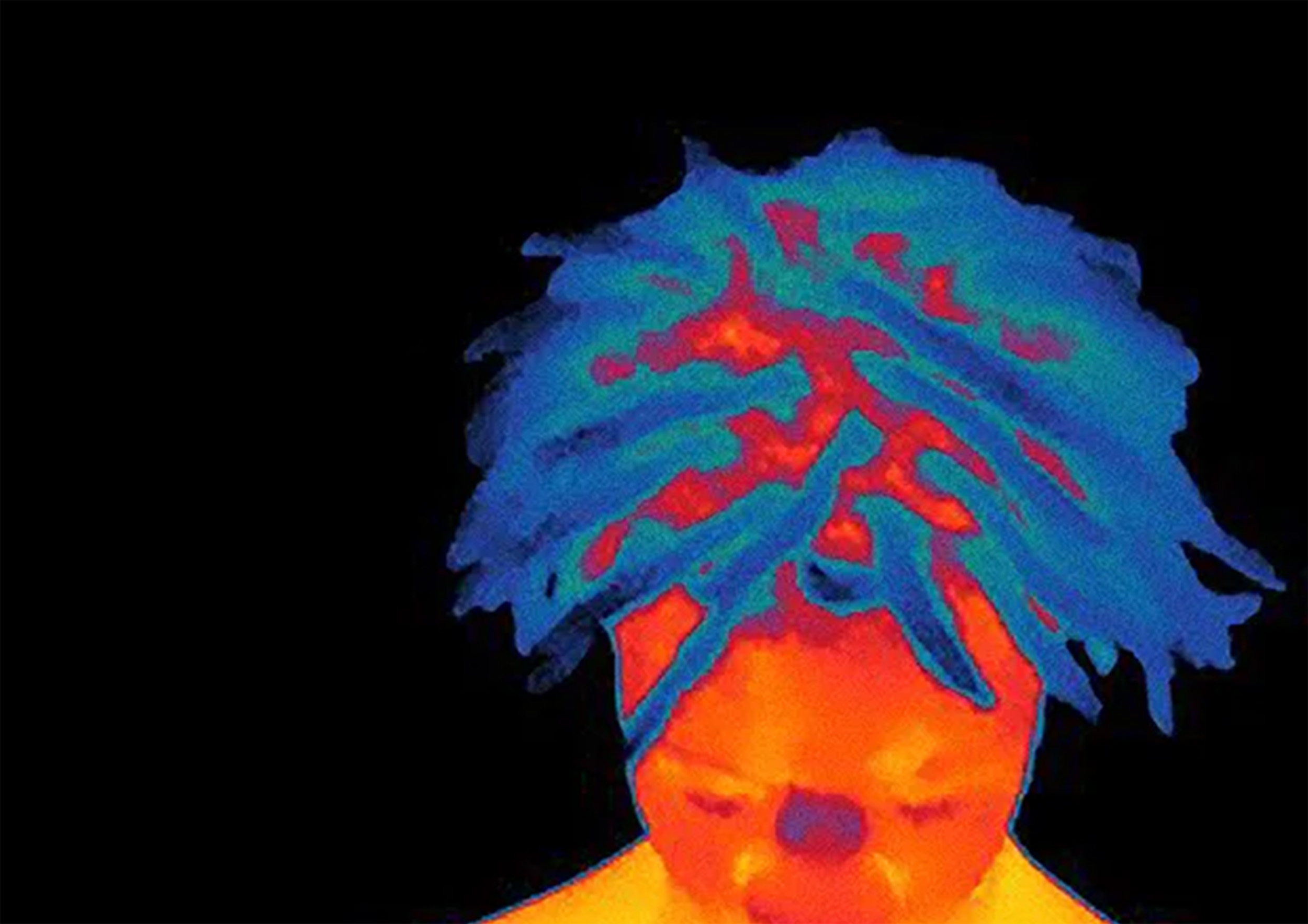
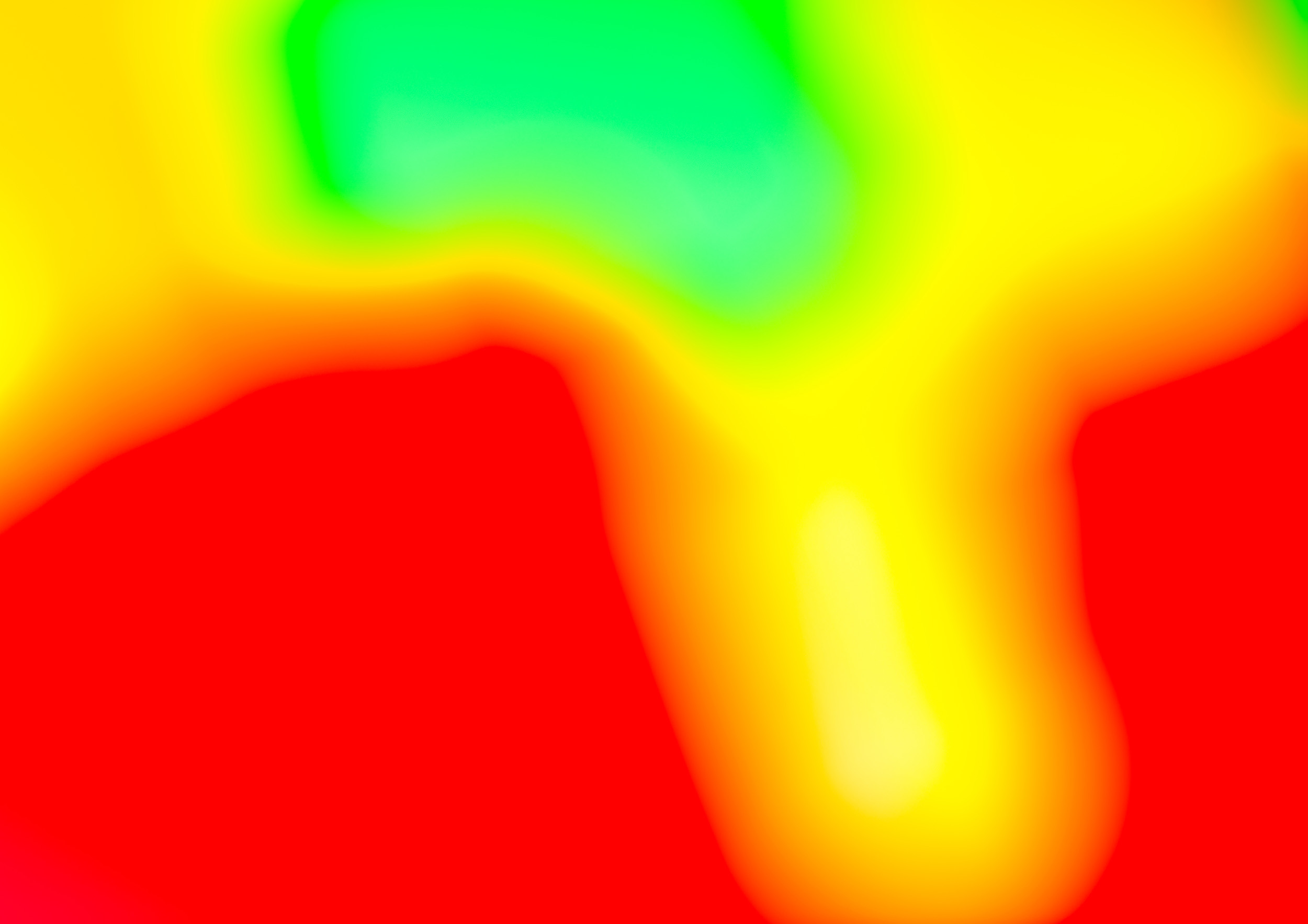


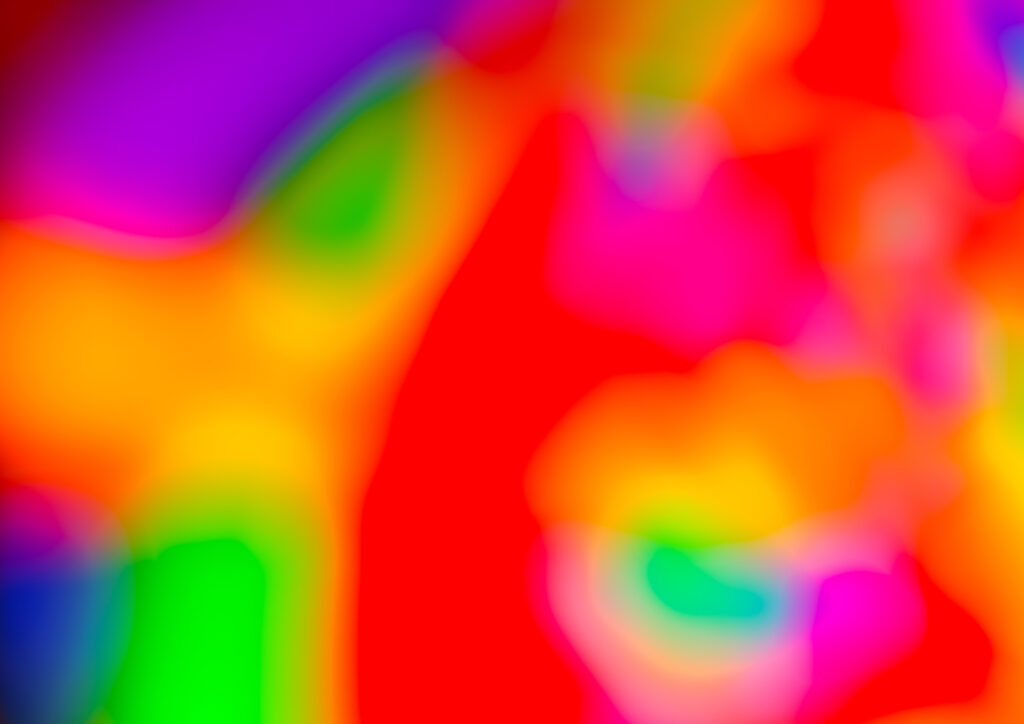
A series of images from border-surveillance thermal cameras, taken from public sources, processed until reduced to a blot in A4 format. Depersonalization is the argument. The blot is recognizable, but one cannot know exactly what it is. The thermal signature of the migrant body, reduced to what the surveillance apparatus records and cannot name.
Materials and signification
Salt, emerging from the paper through crystallization processes, introduces another kind of time. Against the instantaneity of scanning and the constant updating of databases, the crystal grows slowly, accumulating layers, generating unpredictable formations. Salt is what remains when water evaporates; it is the mineral trace of what was once alive. The Mediterranean Sea, that liquid archive of crossings and shipwrecks, is also a body saturated with salt.
The metallic paper and the golden thermal blanket simultaneously evoke orbital debris—the fragment detached from the surveillance apparatus—and the emergency object with which rescued bodies are covered. Their porous sheen, neither matte nor satin, recalls the surface of satellites and their degradation. What remains when technology becomes waste, and what arrives when technology is also insufficient care.
Frontex’s public documentation, hand-torn and incorporated into the drone stratum, operates as source material and as a critical gesture. The budgets, performance reports, and recruitment forms are official documents published by the European agency itself. The agency does not conceal the information. The question is not what is hidden. It is what is shown openly and still not seen.
Declared genealogy
Promises to the North situates itself in a tradition of artistic research on the contemporary infrastructure of surveillance. Trevor Paglen has photographed classified satellites, making visible what operates from invisibility. Hito Steyerl has analyzed the vertical perspective of the drone and its consequences for our relationship with territory and bodies. Forensic Architecture has used satellite-image analysis to document human-rights violations in the Mediterranean, turning surveillance into a tool of counter-surveillance. Harun Farocki investigated operative images made to be processed by machines and not seen by humans.
The connection with the work of Ana Mendieta—a Cuban in exile whose work persistently explored displacement and the bodily trace—and with that of Mona Hatoum, whose work from exile has interrogated the geographies of control, articulates the biographical and political dimension of the project. Bouchra Khalili, in The Mapping Journey Project, makes visible the geography of migrant clandestinity. Promises to the North explores the apparatus that seeks to make that clandestinity impossible.
Details
Intervened photography, printing, and mixed technique on fine-art papers (Canson Infinity Photo HighGloss Premium RC, Baryta Photographique II Matt, Hahnemühle Photo Rag Metallic), office paper, duct tape, salt crystallization, thermal-blanket fragments, silver acrylic, hand-torn Frontex public documentation. Variable dimensions. 2025.