
WTF
Against the salon
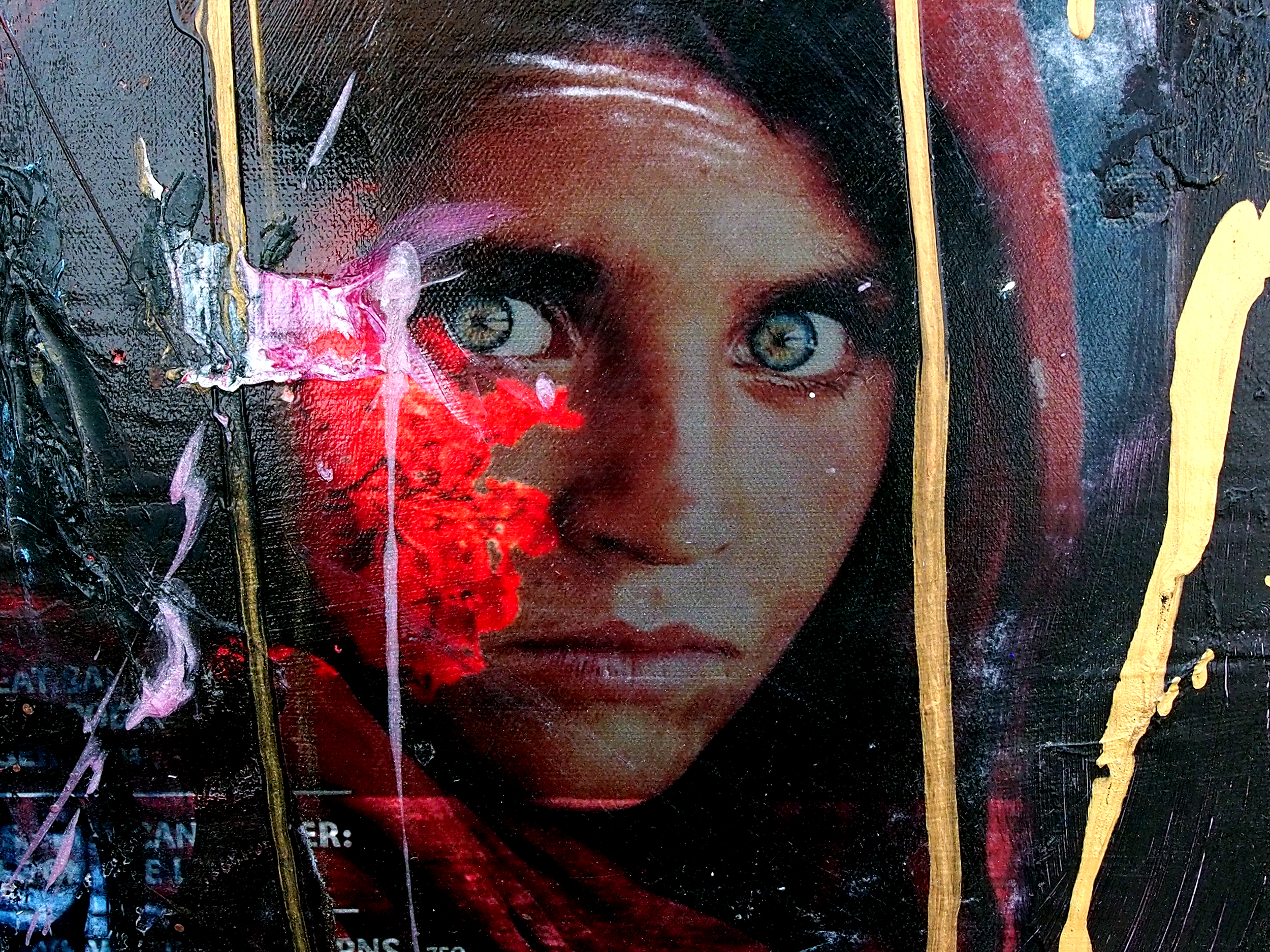
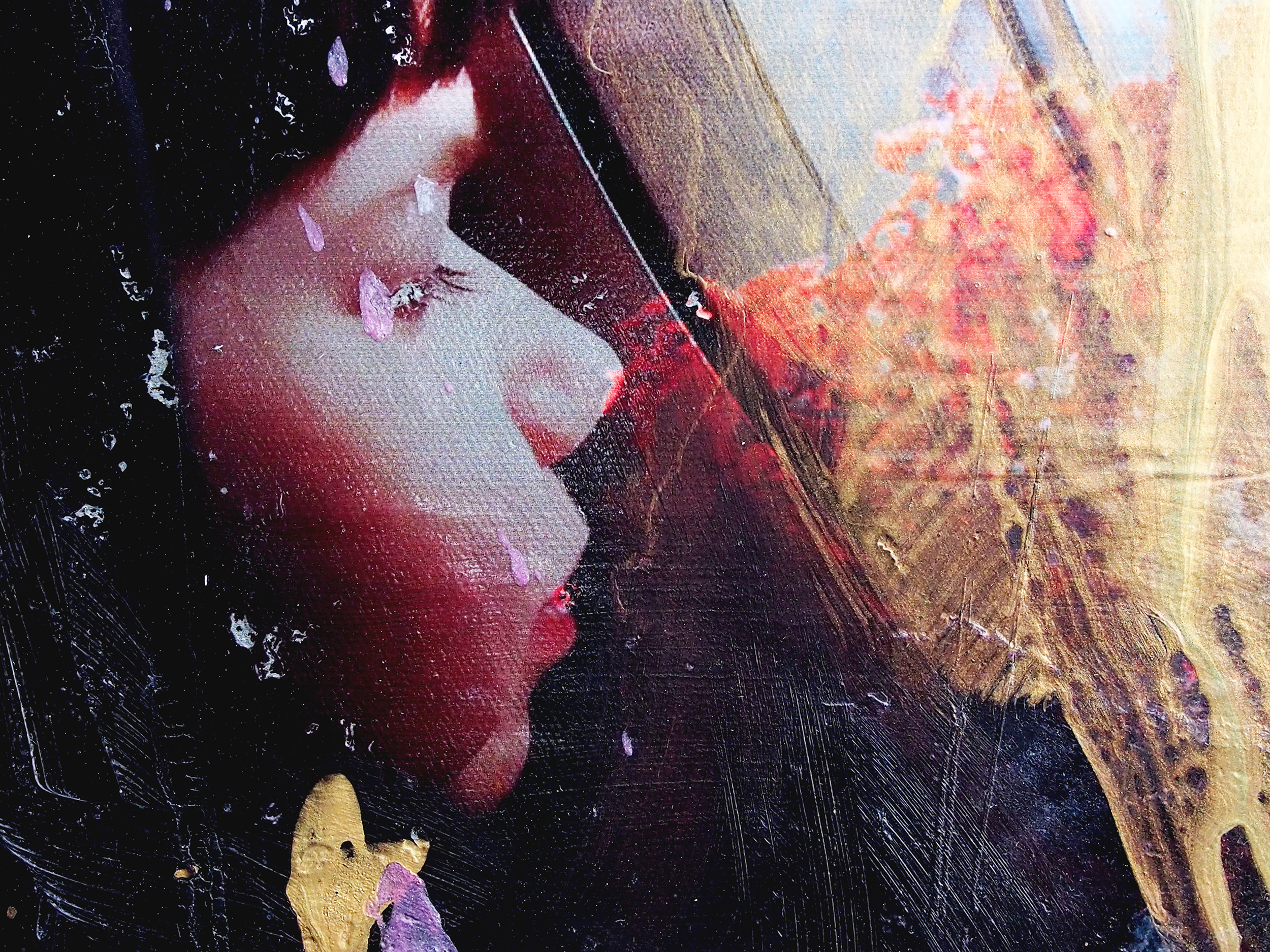
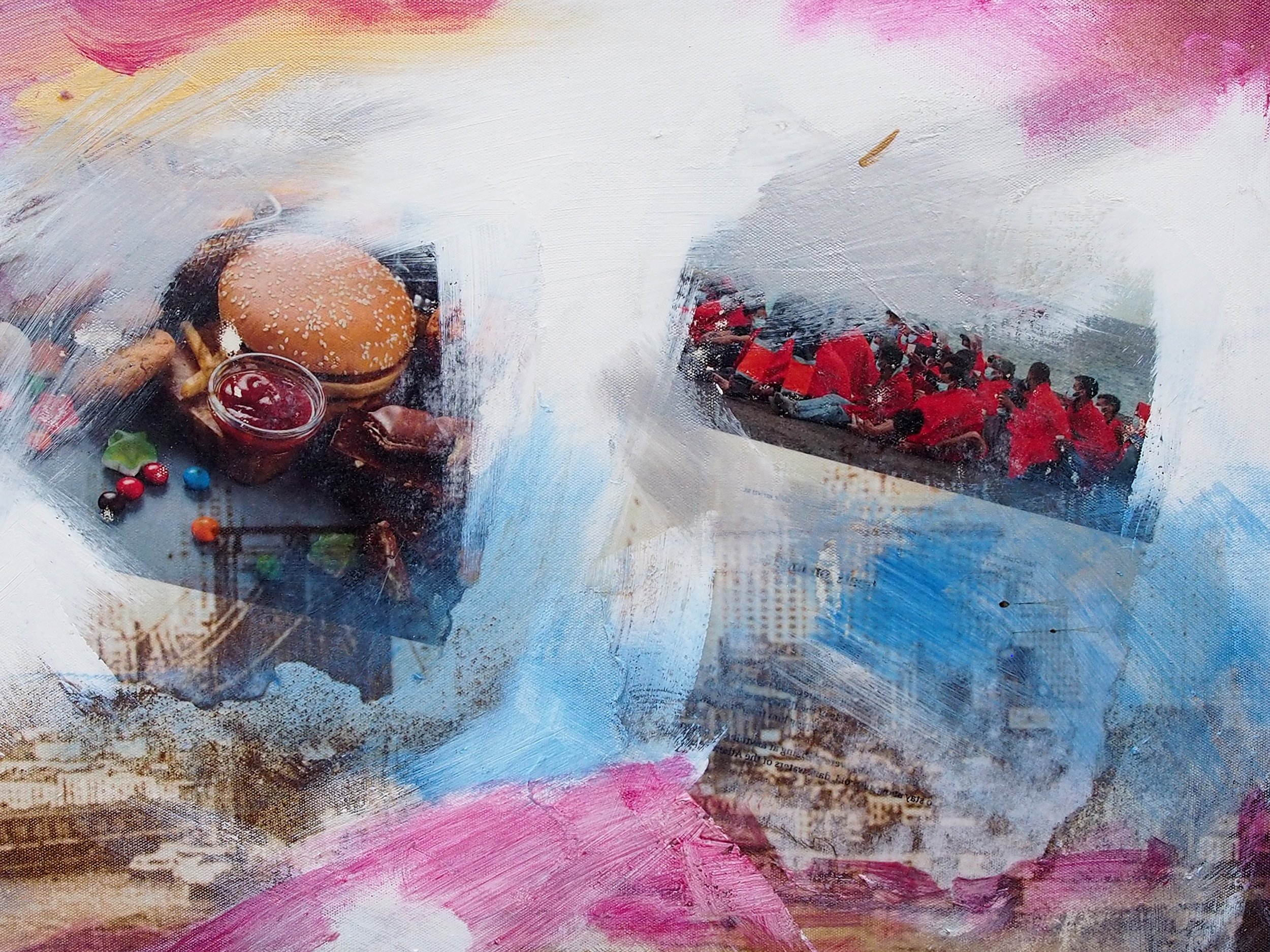
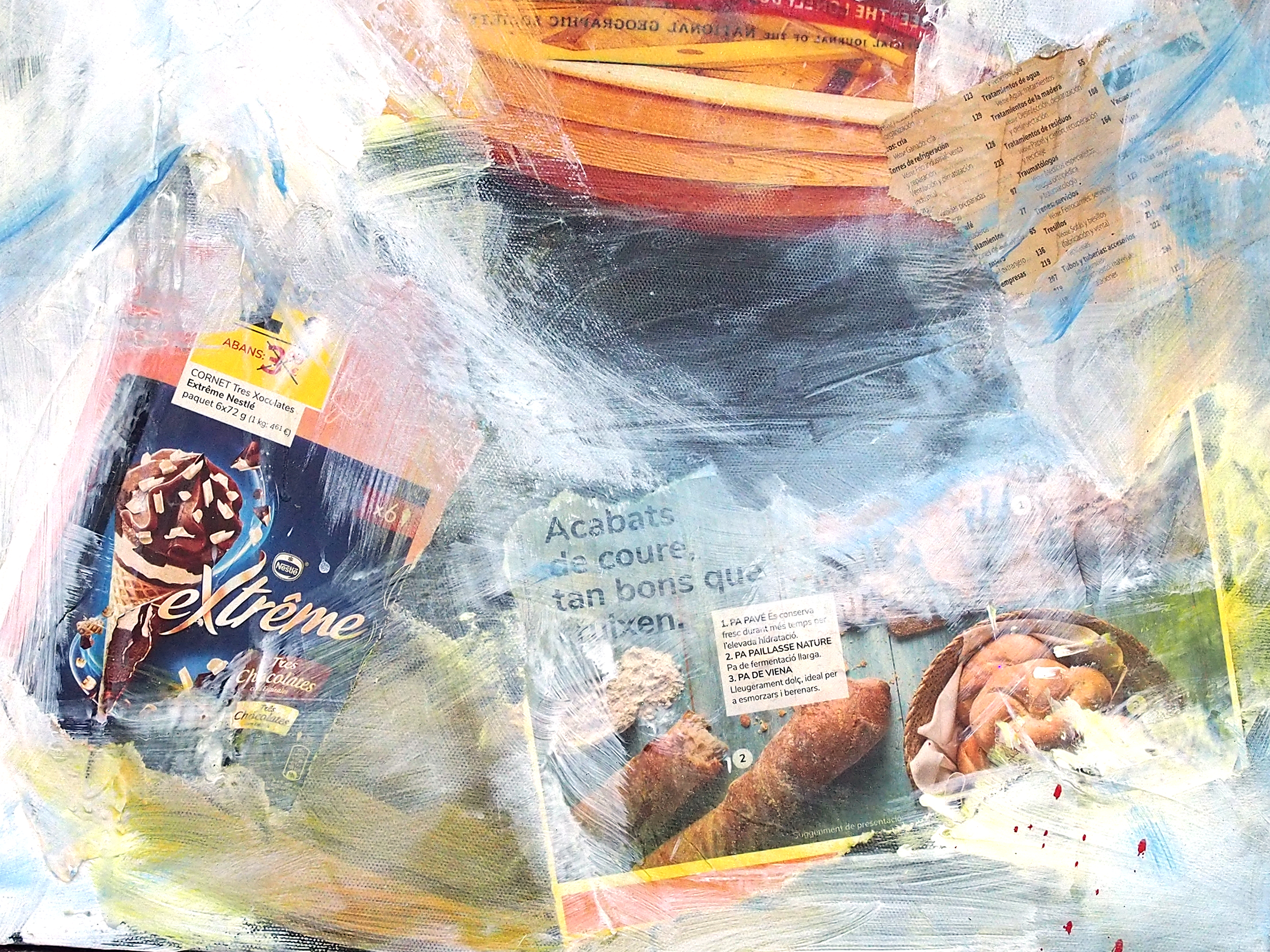
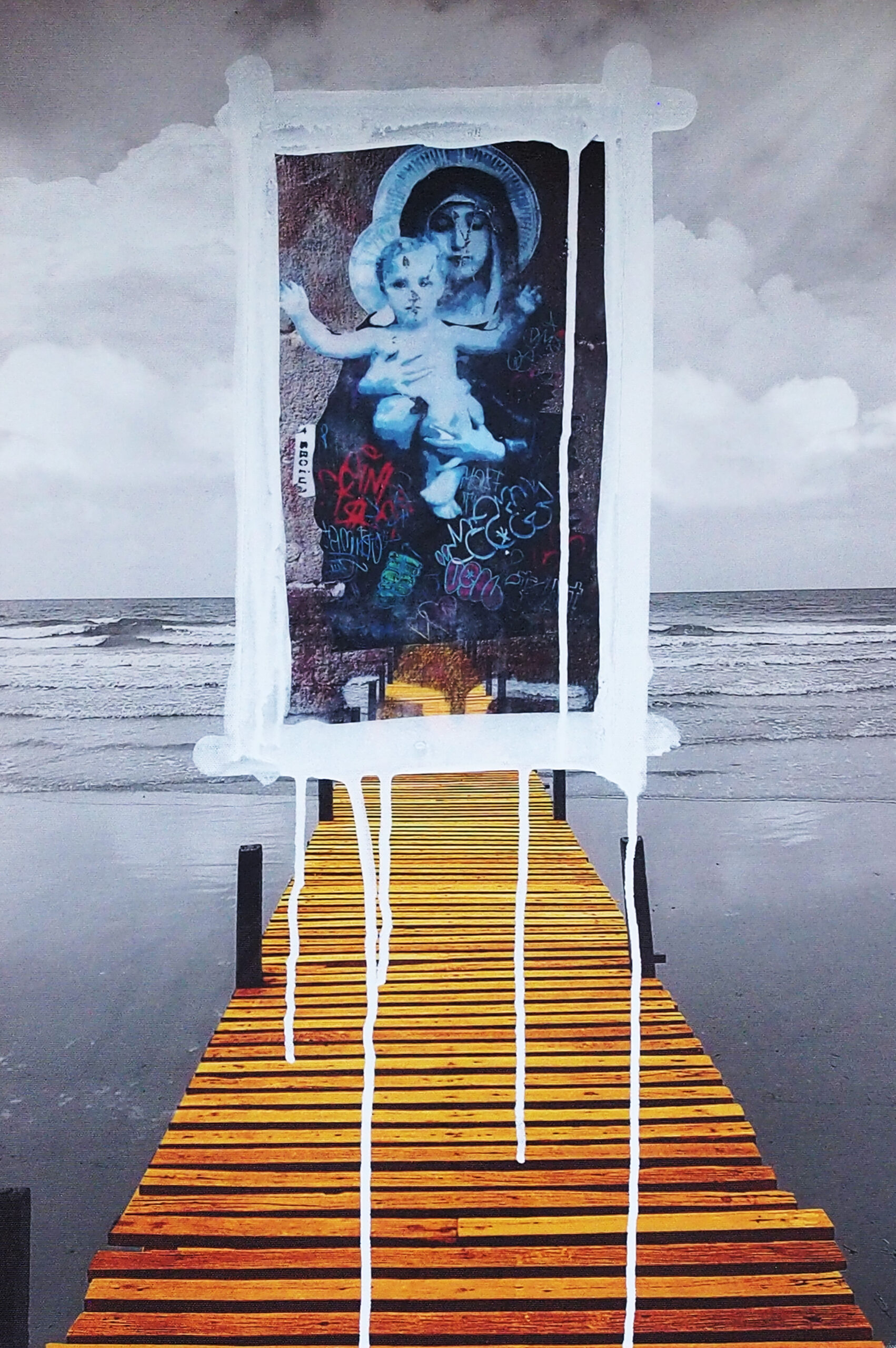
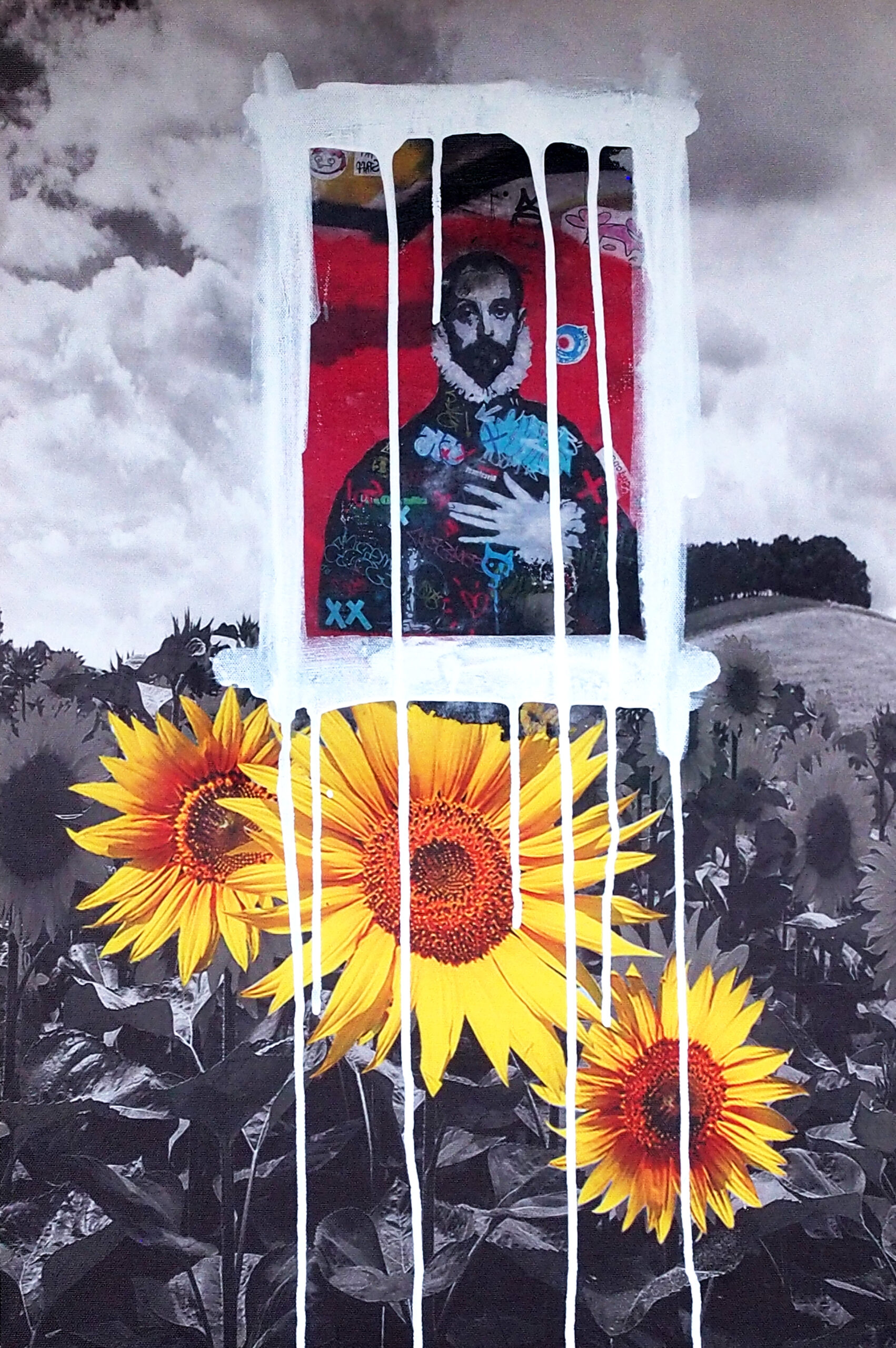
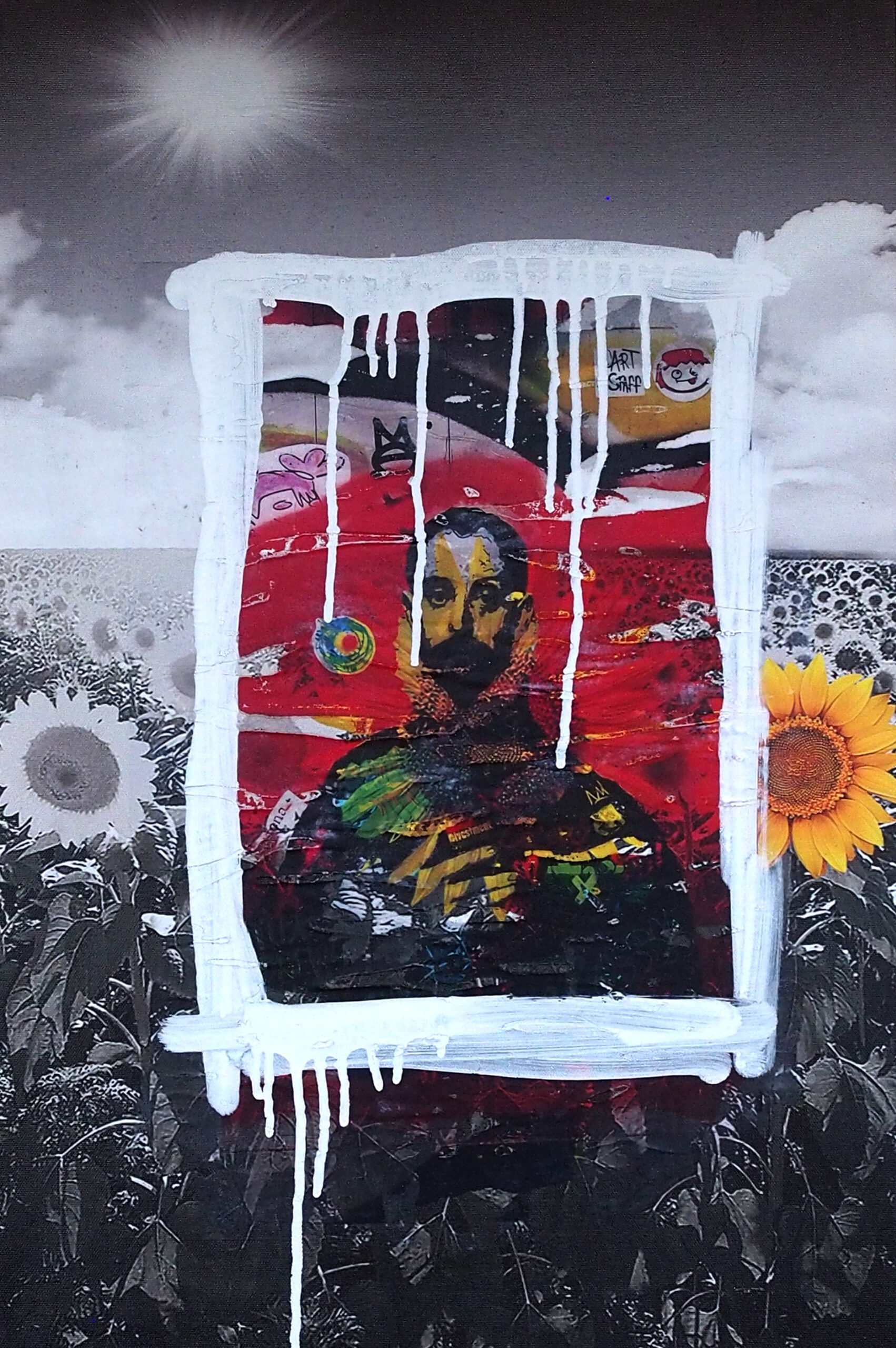
WTF is a series of interventions on industrial decorative canvases deliberately purchased on online retail platforms. The support is not a canvas stretched on an artist’s frame. It is a high-quality printed reproduction, bought for the price of a living-room painting, with images preselected by the market. Bucolic landscapes, bunches of sunflowers, little boats, lakes, urban panoramas. The image that ends up hung on the walls of the average twenty-first-century Western living room.
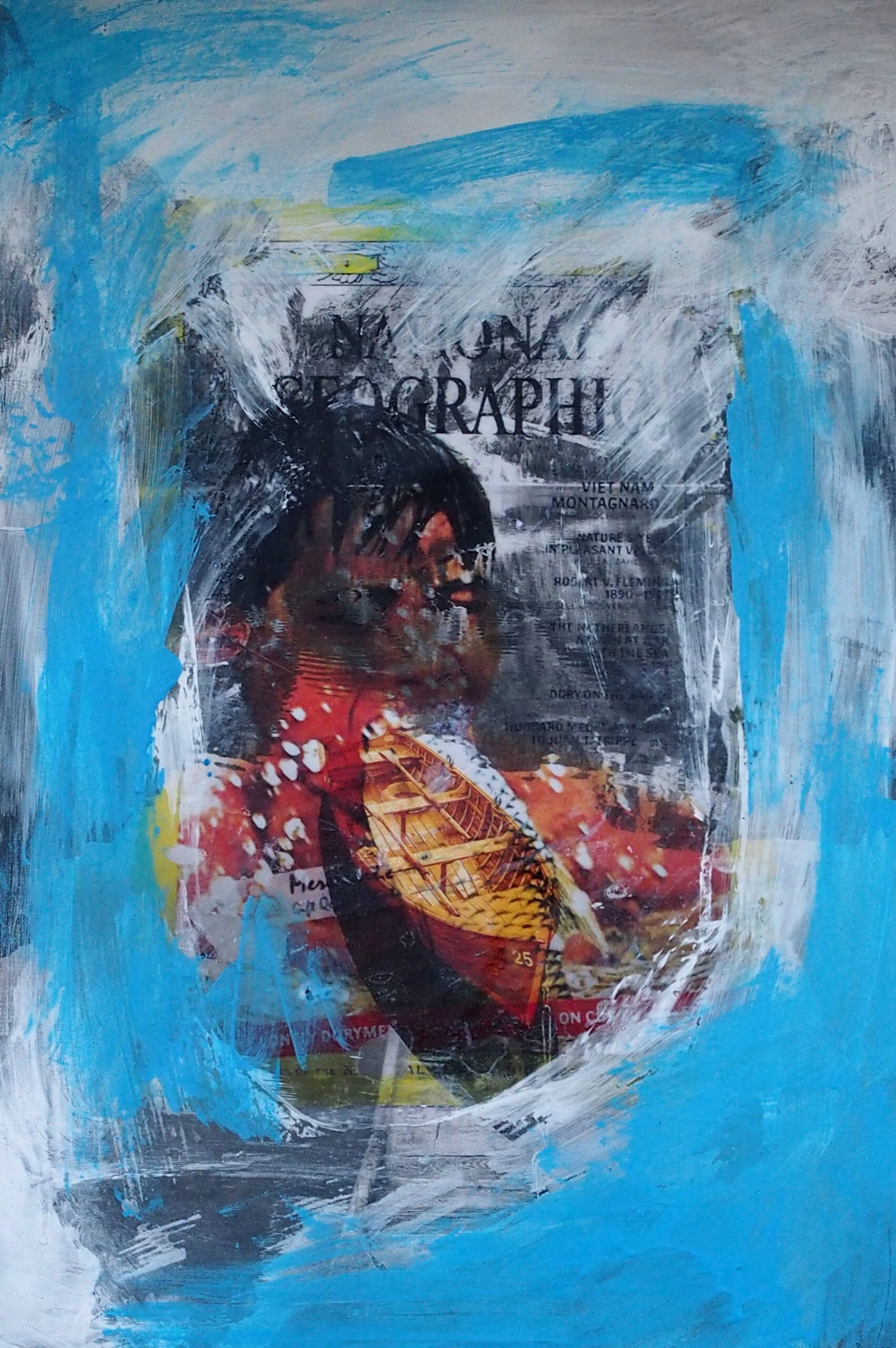
Each piece takes that support and intervenes on it with three simultaneous layers. A transferred photograph, taken from the artist’s own archive or from the iconographic archive of twentieth-century humanitarian photojournalism. A gestural painterly layer in oil and acrylic. And a layer of writing, hand-lettered onto the already intervened surface.
The result is not a canvas painted over a pre-printed image. It is an object where four strata coexist. The industrial one of the purchased canvas, the transferred iconic archive, the manual painterly gesture, the writing. Four temporal registers, four provenances, four implicit authors. The anonymous manufacturer of the decorative canvas, the photographer of the cited icon, the artist who intervenes, and the voice that writes.
WTF names the instant in which the eye trained in the humanitarian iconography of the twentieth century confronts the partial destruction of its own archive. Reaction before concept. Discomfort before discourse. The title operates as a temporal marker of the gesture, and for that reason it is kept untranslated.
The subtitle, Against the salon, names the series’ declared enemy. The living room as a domestic space for accumulating harmless imagery, as a closed circuit of bourgeois taste, as the final wall where decorative painting fulfills the function the market has assigned it. To intervene on those supports through the very purchasing circuit by which they arrive is to introduce noise into the collector’s room before the collector buys it. The critique does not come from outside the system. It installs itself within.
The three internal groupings
The series is organized into three internal groupings that unfold three distinct arguments on the same industrial support.
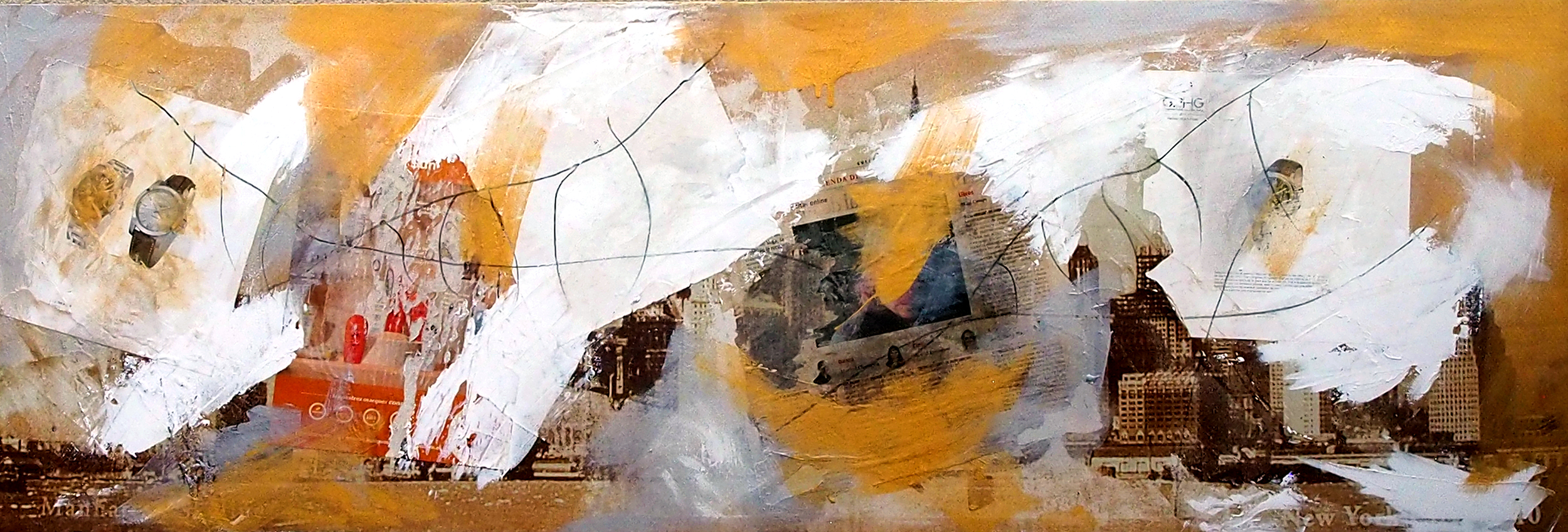
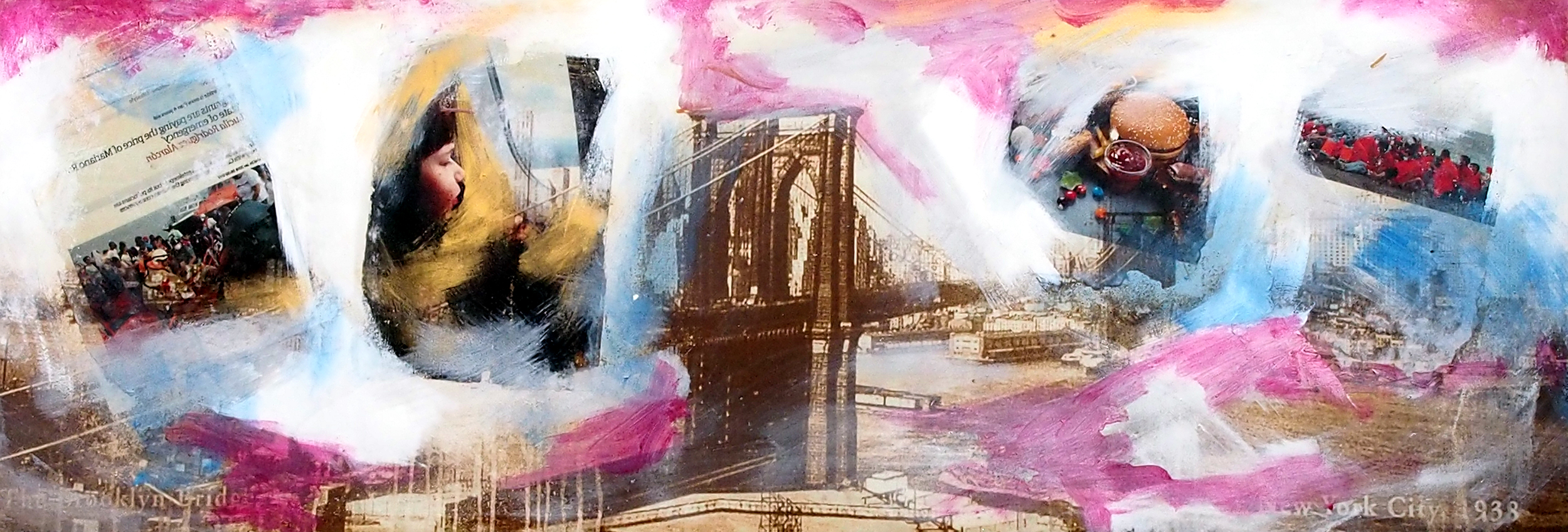
Counterituitions
Two large-format pieces, 45 × 135 cm, on black-and-white industrial decorative photo-canvases reproducing nineteenth-century photographs. The New York skyline and the Brooklyn Bridge. The founding imaginary of the Western migratory dream, reduced to a decoration product available for twenty euros. The intervention decomposes the visual intuition associated with those images (progress, openness, promise) and contradicts them from their own surface. The title’s neologism plays on “counter” and “intuition” and, at once, on “counter” and “institution.” The city as institutionalized migratory icon, contradicted from within.
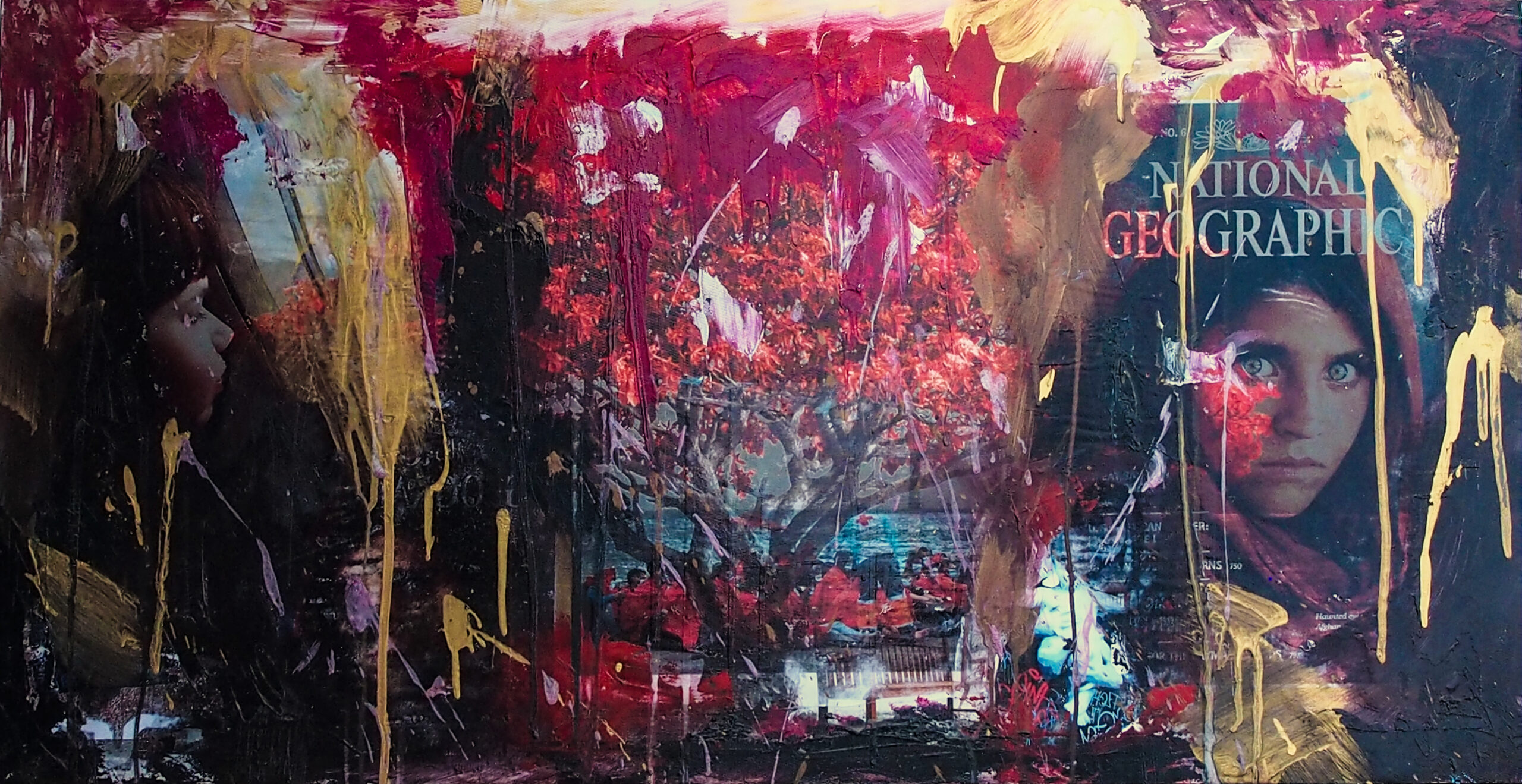
Invisible Sequence
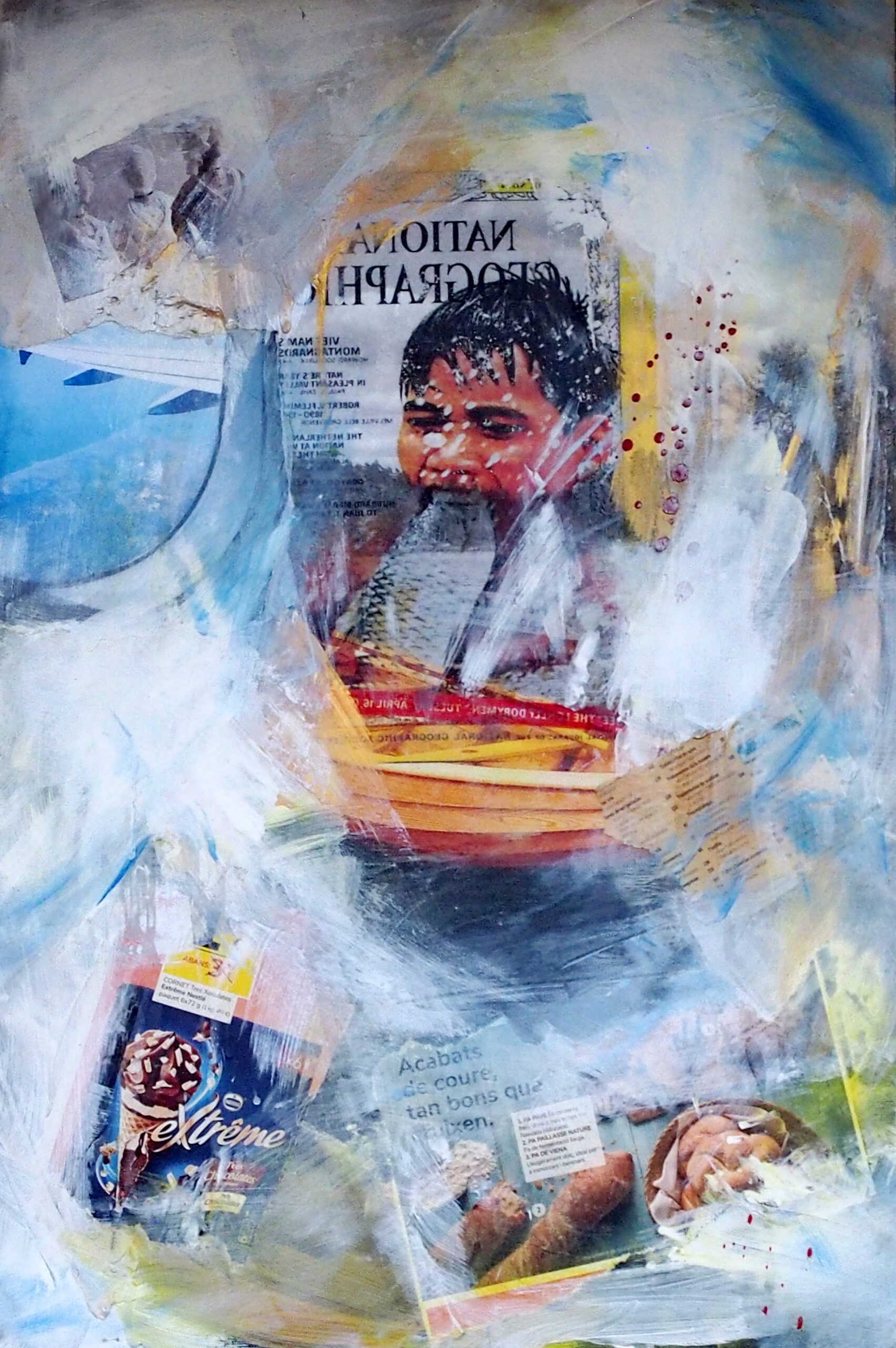
A single piece, 50 × 100 cm, on a decorative photo-canvas with a bucolic landscape. Beneath the central tree, a transfer of an image of immigrants taken in by the Red Cross that is revealed only at close range. To the left of the tree, the artist’s own photograph of a girl looking at the world from an airplane window. To the right, the iconic National Geographic cover with Sharbat Gula, the Afghan girl. Three children’s gazes that activate their sequence only when the viewer crosses them. One girl looks. Another is looked at. In the center, between the two, the hidden humanitarian scene that the bucolic landscape had come to cover.
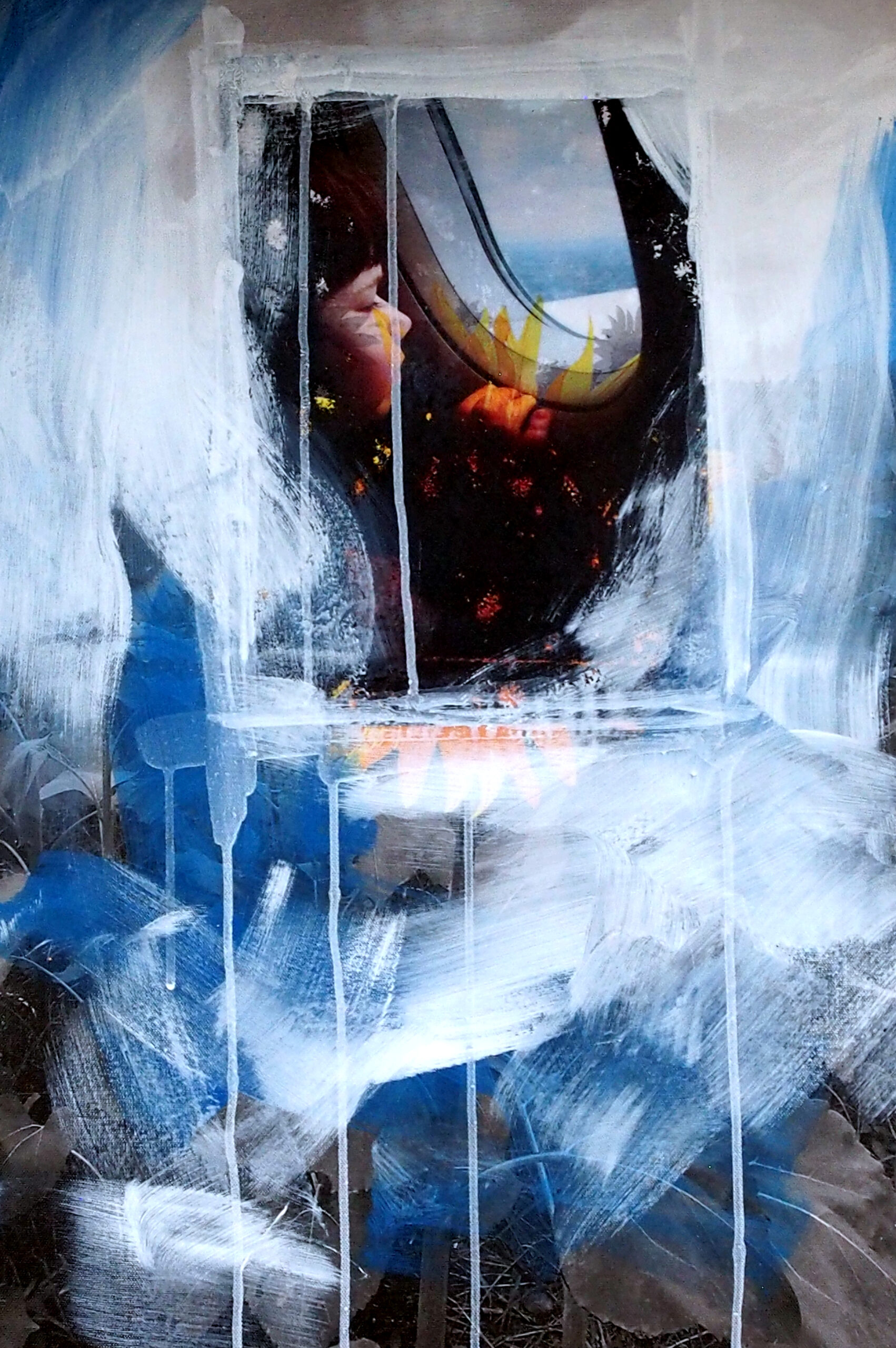
Double Standard
Six pieces, 40 × 60 cm, on small-format industrial decorative photo-canvases (sunflowers, little boats, lake). Photo-transfer of the artist’s own street images, plus two covers of the same humanitarian icon in positive and negative (the National Geographic cover with the boy holding a fish in his mouth). The small format is the one that actually fits into any living room. The operation is the most frontal in the series. The same iconographic material operates simultaneously as living-room decoration and as critical denunciation, depending on who looks at it. Double standard of circulation, double standard of value, double standard of the gaze.
Declared genealogy
WTF explicitly situates itself in the twentieth-century tradition of critical appropriationism. From the mid-1960s onward, Robert Rauschenberg worked from press images—including photographs of John F. Kennedy and covers of Life and National Geographic—in silkscreens that made the media archive a material for painterly composition. Robert Heinecken built work from entire pages of commercial magazines, subverting advertising circulation through its own iconography. Richard Prince appropriated whole Marlboro campaigns and photographs of professional guilds, in a gesture that redefined the legal and aesthetic limits of appropriationism. Barbara Kruger built her work on the visual syntax of the advertisement, inverting the message without abandoning the code.
WTF inherits that tradition and applies it to the specific support of the twenty-first century. It is no longer the newsstand magazine or the billboard advertising campaign. It is the mass-market online decorative photo-canvas, the printed reproduction that arrives at the customer’s mailbox within twenty-four hours. To work on that support is to continue the conversation Rauschenberg opened sixty years ago, at the exact point where the market for decorative reproduction has become automated.
Details
Photo-transfer, oil, acrylic, and writing on industrial photo-canvas. Deliberate acquisition of mass-market online decorative supports. Nine pieces in three formats: 45 × 135 cm (two), 50 × 100 cm (one), 40 × 60 cm (six). 2022–2025.