
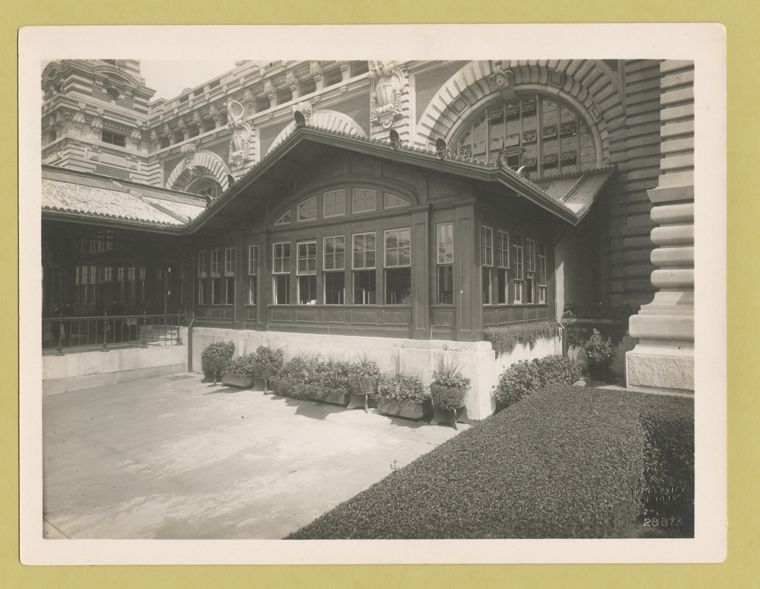
Colonial archives were never neutral repositories of memory. Many of the photographs now held by libraries, universities, and museums were produced by Western anthropologists, administrators, missionaries, soldiers, and travellers within a very specific structure of power. The camera did not merely record the world. It separated people from their contexts, organised them according to presumed races, ethnicities, anatomies, customs, or stages of civilisation, and transformed their bodies into visual evidence for a theory. The violence was not always confined to what the photograph depicted. It also resided in who was allowed to look, classify, name, and preserve, while the photographed person had little or no control over how the future would see them.
My approach to these archives does not arise from obedience to what is now called woke, a term too elastic and exhausted to replace critical thought. Nor do I believe that these images should remain untouchable. My position grows out of an experience of migration, exile, and displacement. That experience grants me no authority over other people’s bodies, but it does compel me to consider carefully what I do with them. My ethical framework begins with a simple question. Why does this work need to exist, and whom might it harm. Other uncomfortable questions follow. What power relationship does it reproduce, what information does it erase, what suffering does it turn into an aesthetic experience, and what does the artist gain by recirculating an image originally produced without consent.
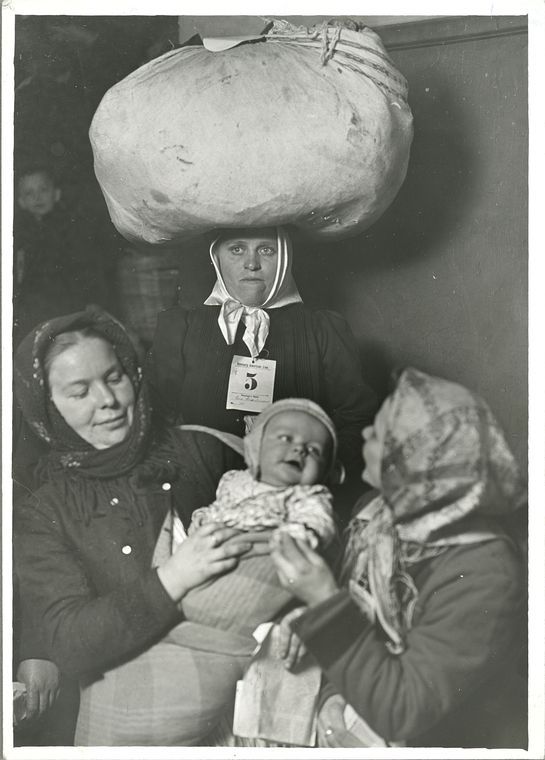
Many colonial photographs have been digitised and some are in the public domain, but these are not equivalent conditions. The New York Public Library provides high resolution downloads of the materials it identifies as being out of copyright. The Library of Congress maintains curated sets of images with no known restrictions. Gallica, the digital library of the Bibliothèque nationale de France, provides access to royalty free collections and to materials used under agreements with rights holders. Yet digital availability does not make every use legally secure or ethically defensible. Each record must be examined individually because public domain status, an open licence, and no known restrictions describe different legal situations.
The scale of the material is immense. The Pitt Rivers Museum holds major nineteenth and twentieth century photographic collections, including fieldwork records and archives produced during the colonial period in northeast India. The British Library preserves the India Office photographic collections associated with the administration of the East India Company and the British Government of India. Frankfurt University maintains the Colonial Picture Archive, containing approximately 55,000 images from the German Colonial Society, fully digitised and available online wherever the legal situation permits. The Musée du quai Branly provides hundreds of thousands of online records from its photography and graphic arts holdings, while the AfricaMuseum in Tervuren allows public domain archival images to be downloaded directly. Europeana aggregates tens of millions of objects from European cultural institutions, although rights and reuse conditions remain specific to each item.
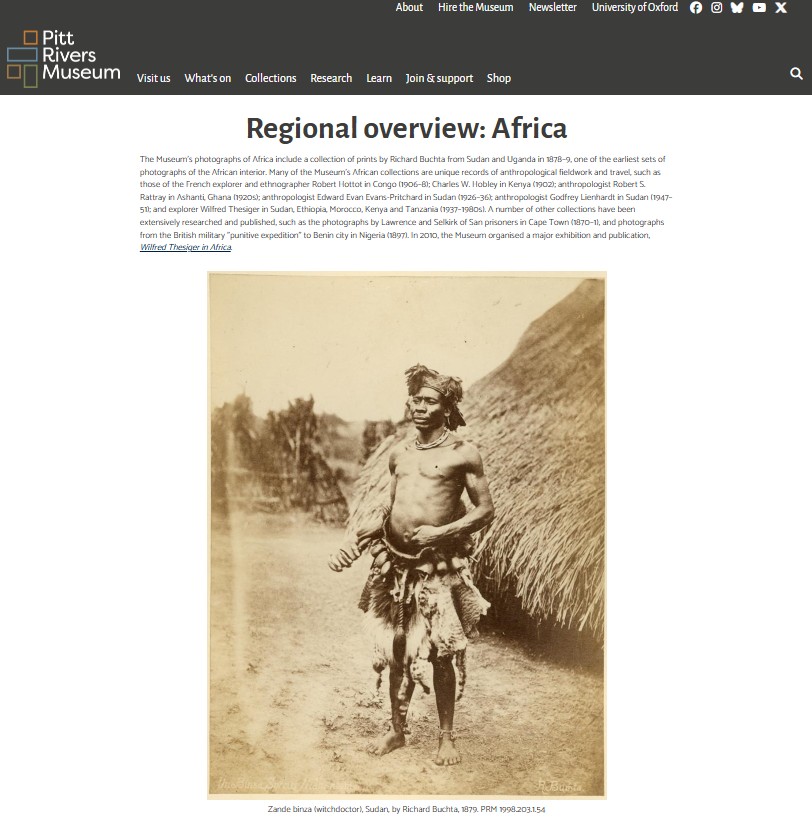
Faced with this abundance, the artist’s first responsibility is not to download, but to investigate. Before altering a photograph, we should reconstruct, as far as possible, who commissioned it, who operated the camera, who was photographed, under what conditions the image was made, which research or administrative purpose it served, and who wrote the title that still accompanies it in the catalogue. Original descriptions should remain accessible as historical evidence, but they should not be repeated as innocent facts. The archive must reveal its own seams. The catalogue number, holding institution, date, known or unknown authorship, licence, original caption, and every transformation made by the artist should accompany the resulting work. Without traceability, critical intervention can easily become another act of appropriation.
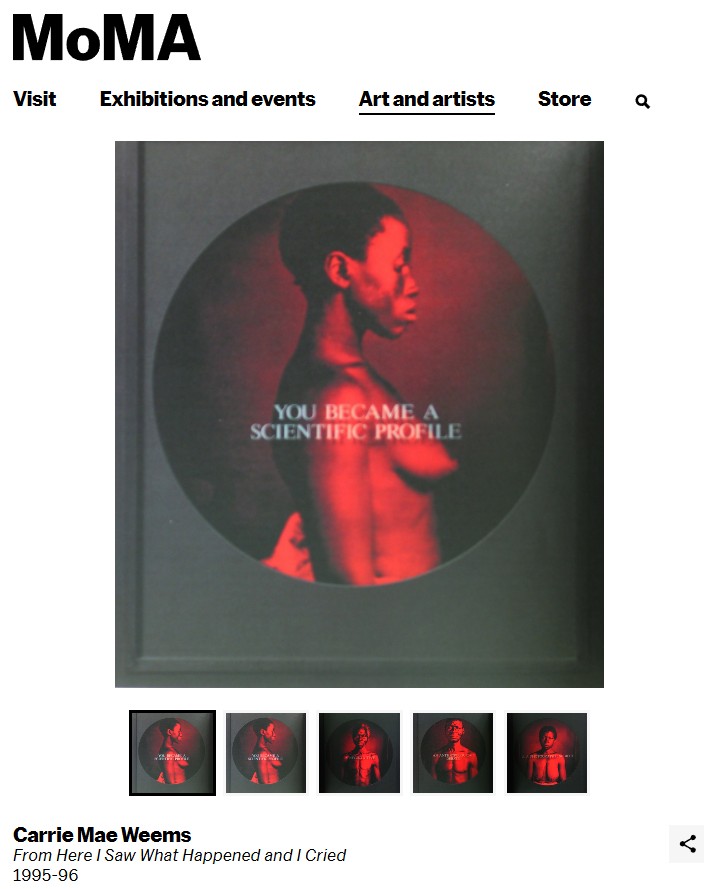
Several artists have demonstrated that intervention does not mean decorating a document. In From Here I Saw What Happened and I Cried, Carrie Mae Weems reused photographs of enslaved people and other Black subjects obtained from university and museum archives. She enlarged, cropped, and tinted them, placed them beneath glass engraved with text, and deliberately disrupted their appearance as scientific evidence. Her intervention does not remove the original violence. It exposes how framing, classification, and circulation helped to produce it.
In Mémoire, Sammy Baloji inserted colonial photographs of Congolese workers into contemporary landscapes of abandoned mines in Katanga. The montage connects the exploited body with the devastated territory and demonstrates that colonialism is not a closed historical episode, but an infrastructure that continues to act upon the present. Délio Jasse works with passports, administrative documents, family albums, and found photographs through screen printing, layering, and historical printing processes. In his work, the stamp, number, and bureaucratic stain cease to be secondary information and become the material anatomy of colonial power.
Other artists have displaced the oppressive archive from the centre altogether. Santu Mofokeng’s The Black Photo Album / Look at Me recovers portraits commissioned by Black working and middle class families in South Africa between 1890 and 1950, together with information about the people portrayed. Against the ethnographic and state archive, Mofokeng constructs a counterarchive of self-representation. Lisa Reihana begins in Pursuit of Venus [infected] with a nineteenth century French panorama of the Pacific and transforms it through moving image, sound, performance, and Māori and Pacific presence. She does not simply correct the colonial picture. She introduces duration, conflict, speech, and the return of the gaze.
In Flowers for Africa, Kapwani Kiwanga adopts an especially lucid strategy. Rather than exhibiting violated bodies once again, she studies photographs of African independence ceremonies and reconstructs the floral arrangements visible on tables and podiums. The flowers are allowed to decay during the exhibition. The archive becomes matter, duration, and loss. Her work demonstrates that history can be approached through its margins, secondary objects, and absences without turning the colonised body into visual fuel once more.
There is no single correct method, but there must be limits. Photographs involving forced nudity, deceased people, children, restricted ceremonies, or sacred knowledge require specific assessment and, whenever possible, engagement with communities of origin. Initiatives such as Local Contexts allow Indigenous communities to define labels specifying cultural authority, access conditions, and permitted uses. The CARE Principles bring collective benefit, authority to control, responsibility, and ethics into the governance of Indigenous data. The Protocols for Native American Archival Materials further recognise that communities may retain primary rights over culturally sensitive materials even when Western institutions possess the physical documents.
The use of artificial intelligence also demands scrutiny. Training models on colonial archives, reconstructing faces, completing bodies, or generating imitations of cultural groups can continue the same extractive logic through a new technology. When AI participates in an intervention, its role should be declared, its transformations should remain auditable, and its limitations should become part of the work. Technological opacity does not repair colonial opacity. It merely automates it.
Intervening in a colonial archive may involve painting, erasing, fragmenting, covering, translating, assembling, printing, converting images into data, relating them to territory, or deciding that a particular photograph should not be shown again. Absence can also be a political decision, provided it does not operate as a decorative void. What matters is whether the transformation changes the photograph’s regime of interpretation instead of placing an attractive surface over an intact structure of violence.
I do not aspire to speak for the people who appear in these images, nor do I claim that an artwork can restore a voice I never heard. Such a promise would reproduce the paternalism I am trying to question. My responsibility is more concrete. I can expose the apparatus that transformed people into types, available bodies, and objects of knowledge. I can document every source, acknowledge uncertainty, refuse to turn suffering into formal seduction, and construct a critical distance from which these photographs can no longer be consumed with the same tranquillity in which they were produced.
The public domain is a legal category. Dignity is not. An archive may be opened with a click, but before intervening in it we must answer to the people it once transformed into evidence.