
Gold Route
A curatorial program involving interventions on monuments using rescue thermal blankets, rope, and sailor’s knots.
Status: research project. Formal submission to Barcelona City Council in September 2026. The process is documented here as it advances.
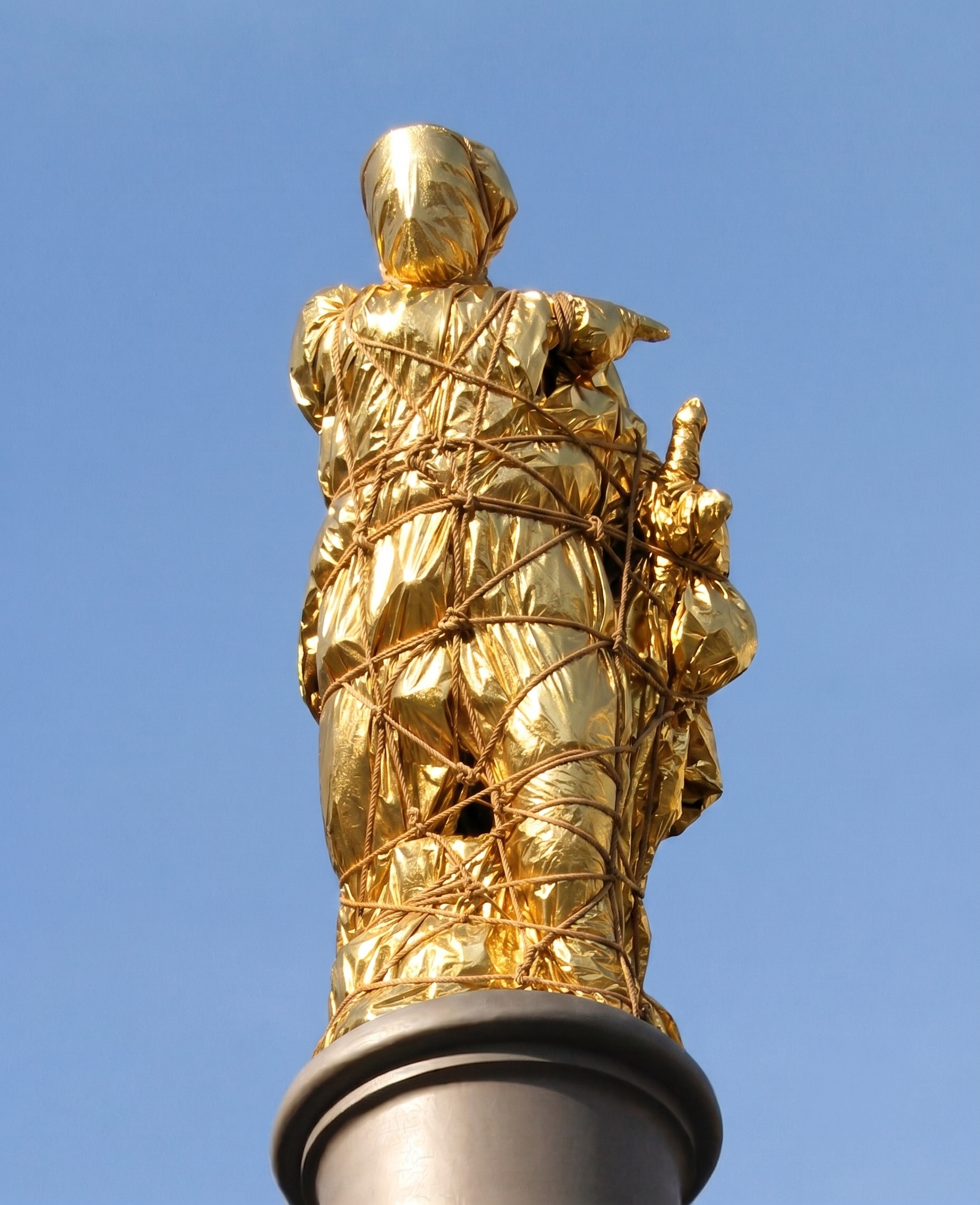
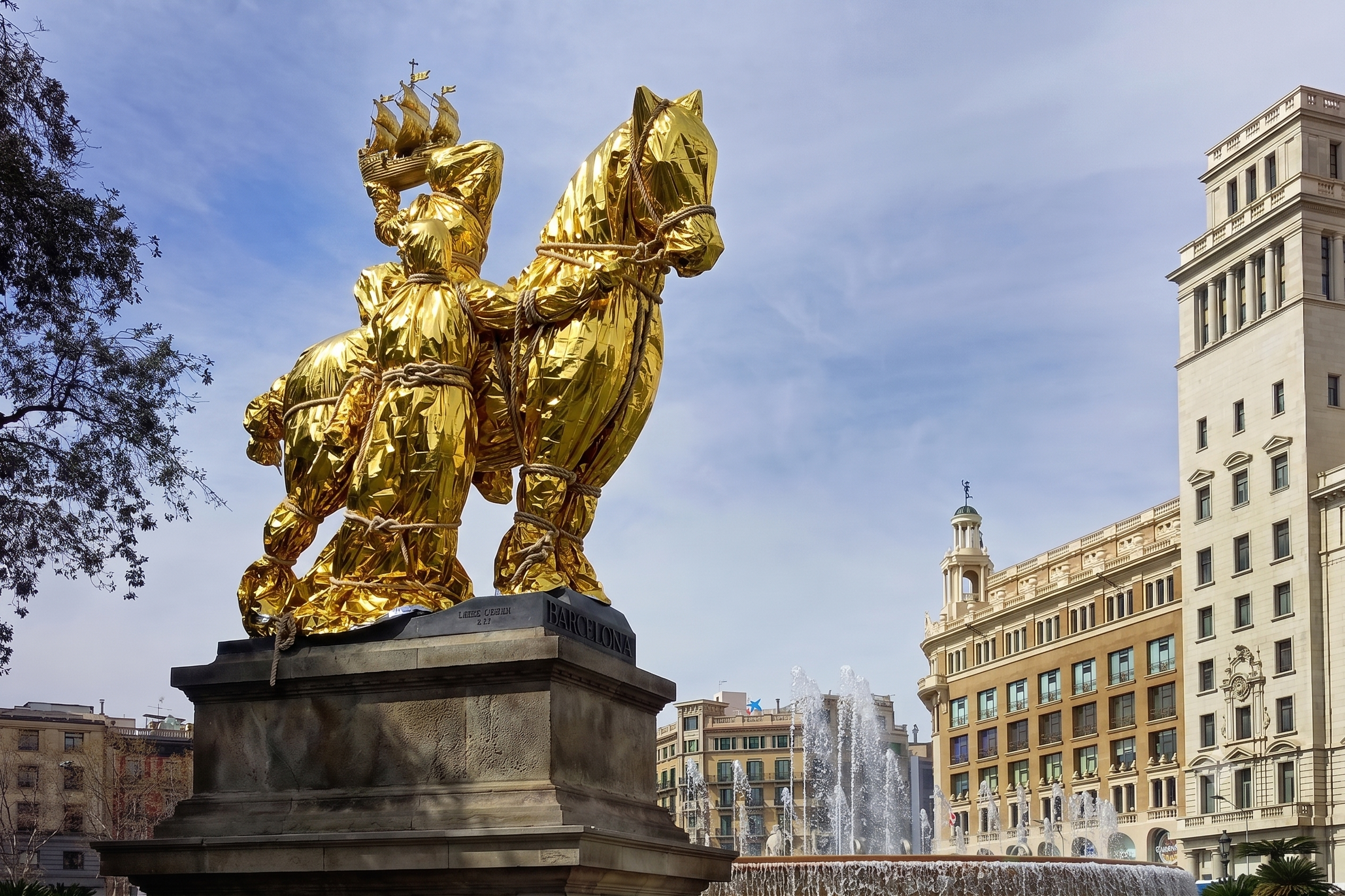
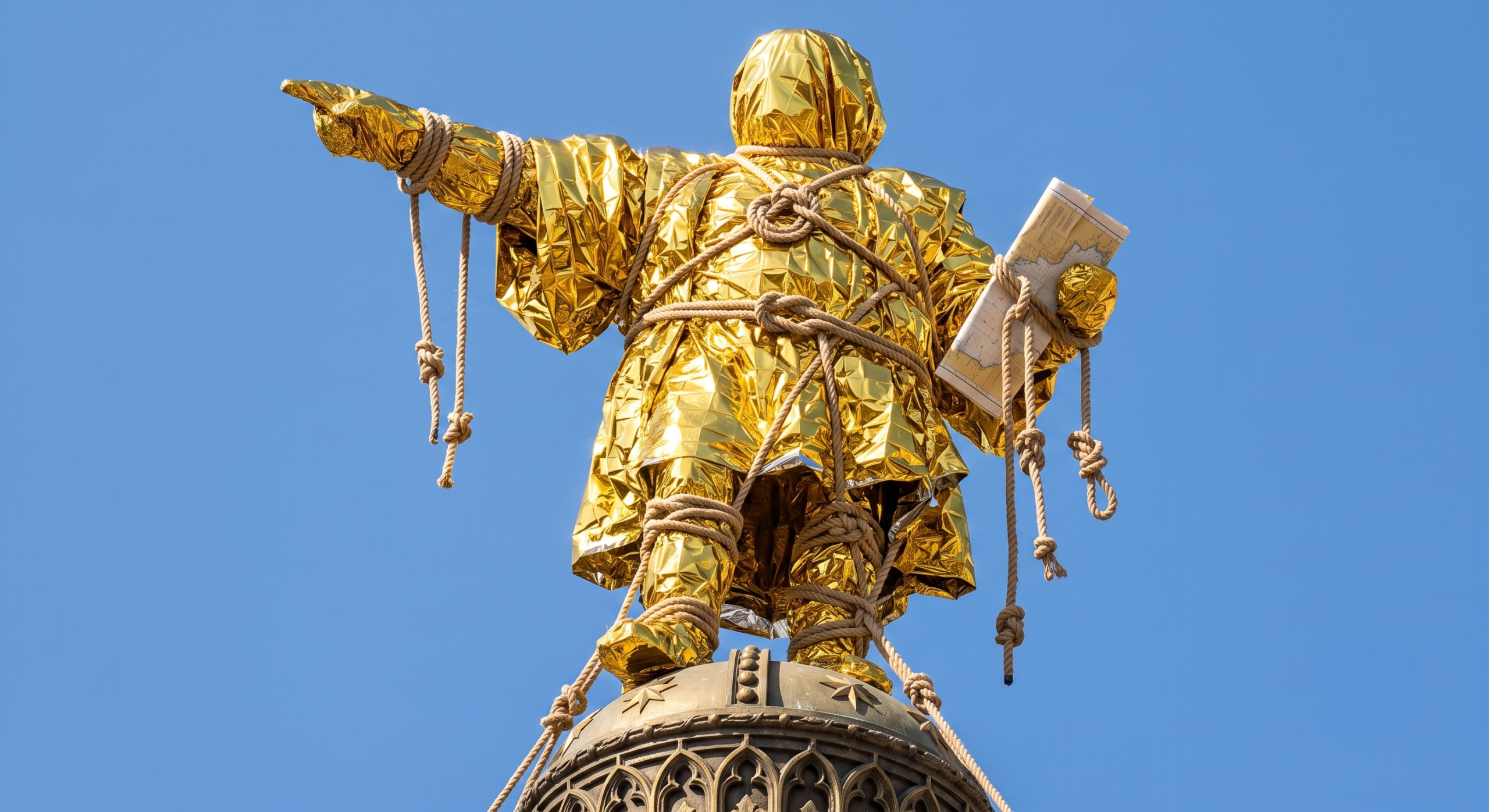
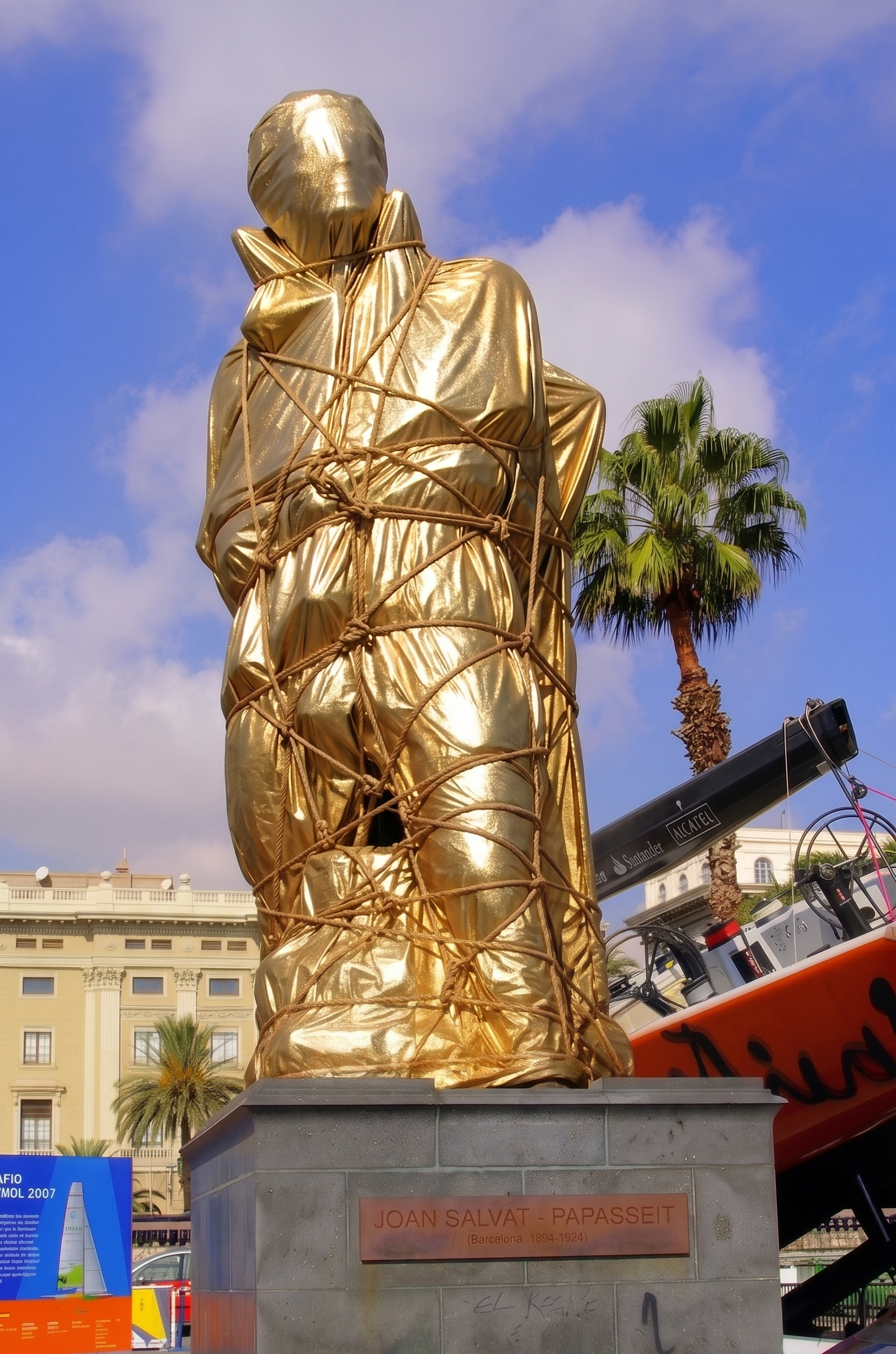
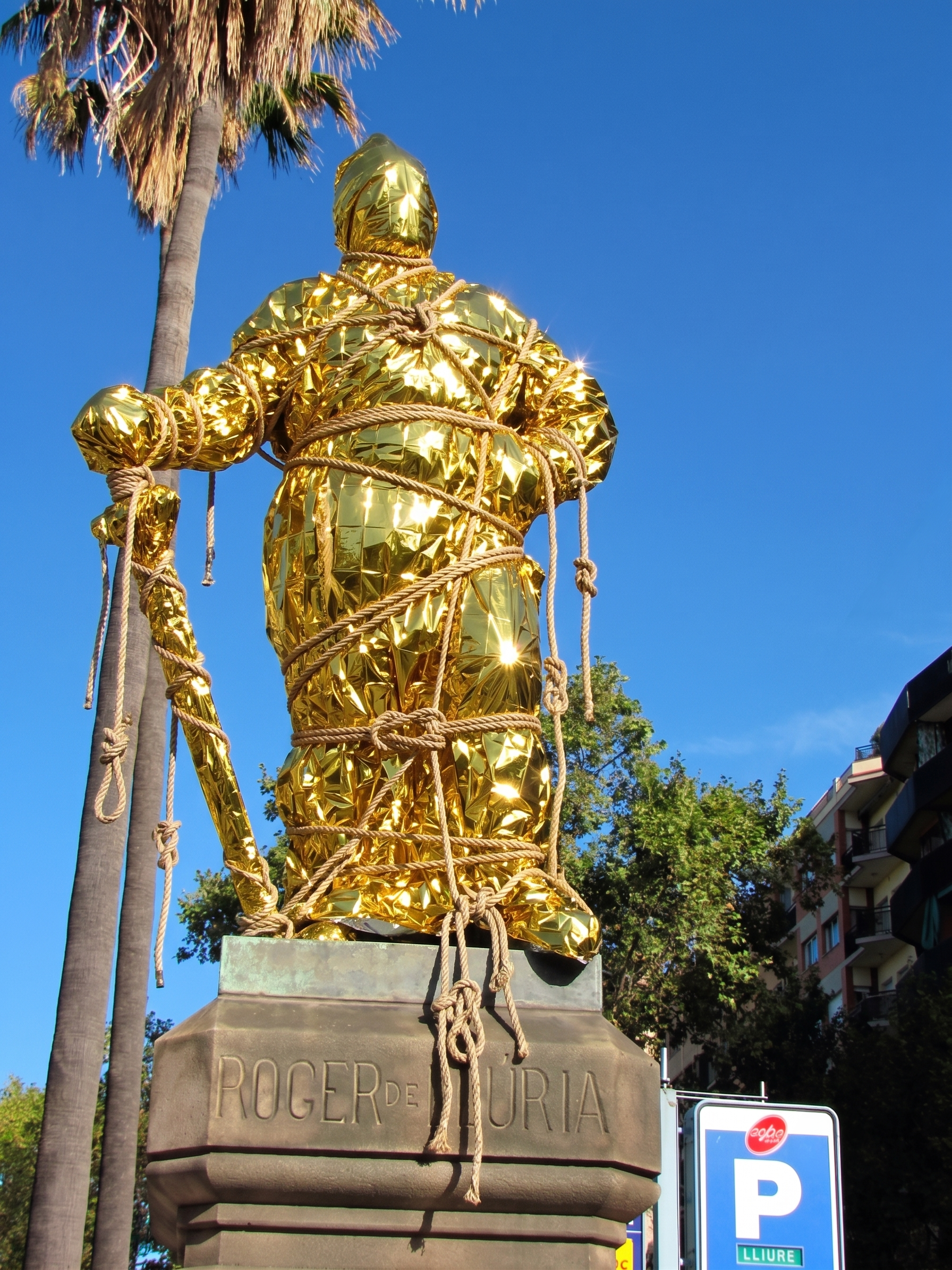
The Gold Route is a transnational curatorial program that intervenes on historical monuments with golden thermal rescue blanket. The operation combines two time scales. That of the monument, which celebrates a consolidated history of conquest, commerce, expansion, or sovereignty. And that of the contemporary emergency material, which today wraps the bodies fleeing precisely along the routes those histories opened. To wrap the statue with the same material used to wrap the rescued is to state without needing to explain. The city, for a few days, looks at the bronze as one looks at a news item.
The program is situated within the lineage of public-scale wrapping opened by Christo and Jeanne-Claude, from Wrapped Coast in 1969 to the Monument to Vittorio Emanuele II in Milan in 1970, to the Reichstag in 1995 and the Arc de Triomphe in 2021. It also situates itself within the use of rescue material as contemporary migratory sign explored by Giovanni De Gara in Eldorato since 2018. The Gold Route distinguishes itself from both lineages through two specific operations. It combines the gesture of monumental wrapping with the exact material of contemporary migrant rescue, not with a generic or aesthetically neutral material. And it operates within a larger investigation of the Mediterranean as a space of disappearance, with which it shares theoretical framework, subject, and source-traceability system.
Barcelona, first city of the proposal
Barcelona occupies a particular position in the history the program seeks to activate. Atlantic and Mediterranean port simultaneously, base of the Crown of Aragon toward the eastern Mediterranean, seat of the late Casa de Contratación, symbolic terminal of the American colonial project, and today one of the European ports operating closest to the migratory routes of the western Mediterranean. Its urban monumentary reflects all of that.
The Monument to Columbus, inaugurated in 1888 at the port front, is the optimal scenario of the first phase. Sixty meters of column with the navigator pointing to the sea, at precisely the point where the city connects with what remained on the other side. To wrap that monument with golden thermal blanket activates a reading that requires no explanatory text. As a minimum viable core, the proposal also includes a series of accessible monuments in the historic center. The Monument to Galceran Marquet, dedicated to the fourteenth-century Catalan admiral, and others linked to the commercial and military history of the medieval and modern port. Each intervention is documented photographically and removed without leaving material trace on the monument.
Planned Urban Geography
Barcelona is the first city. If the program is activated, the following are identified by their specific historical charge in the colonial gold route, the Atlantic slave trade, and current migratory routes. Seville, historical terminal of the Carrera de Indias. Cádiz, replacement port after 1717. Lisbon, seat of the first Atlantic colonial empire. Cartagena de Indias and Havana, at the other end of the route. Antwerp, Amsterdam, and Genoa, financial squares of colonial gold. The list operates as a work program, not as a closed agenda.
Technical note
The images accompanying this page are digital simulations of the project, generated for the formal proposal to the Barcelona City Council. Digital composition produced with simulation and photo-editing tools.